 Skip to content


The Ultimate Guide to Choosing the Best Jewelry Stand for Retail and Branding in 2026
A 2023 study by the Retail Design Institute revealed that 64% of consumers decide whether to engage with a product based entirely on its visual presentation. You likely recognize the frustration when a premium necklace tangles on a flimsy display or a professional jewelry stand tips over during a busy Saturday rush. It's difficult to justify luxury price points when your hardware looks cheap under store lighting or fails to match your brand's aesthetic across different product lines. You need a setup that works as hard as your sales team does.
We're here to help you solve those display dilemmas once and for all. This guide ensures you discover how to select, arrange, and source professional jewelry stands that protect your inventory while significantly boosting your retail sales. We provide a strategic overview of durable materials, factory-direct sourcing, and cohesive arrangement techniques to ensure your 2026 storefront captures every customer's attention and elevates your brand's perceived value. From preventing tangles to creating a unified store look, we've outlined the path to a more profitable presentation.
Key Takeaways
- Learn how vertical display strategies leverage consumer psychology to increase browsing time and drive retail sales.
- Select the perfect jewelry stand by analyzing how different materials like acrylic, wood, and metal influence your brand's aesthetic and durability.
- Discover the precise height requirements and display formats, such as T-bars and busts, needed to protect and showcase specific jewelry categories.
- Apply professional merchandising techniques, including the "Rule of Three" and optimized lighting, to create high-impact, shadow-free presentations.
- Unlock the competitive advantages of factory-direct sourcing and custom branding options to elevate your professional presentation while reducing costs.
Why Every Retailer Needs a Professional Jewelry Stand Strategy
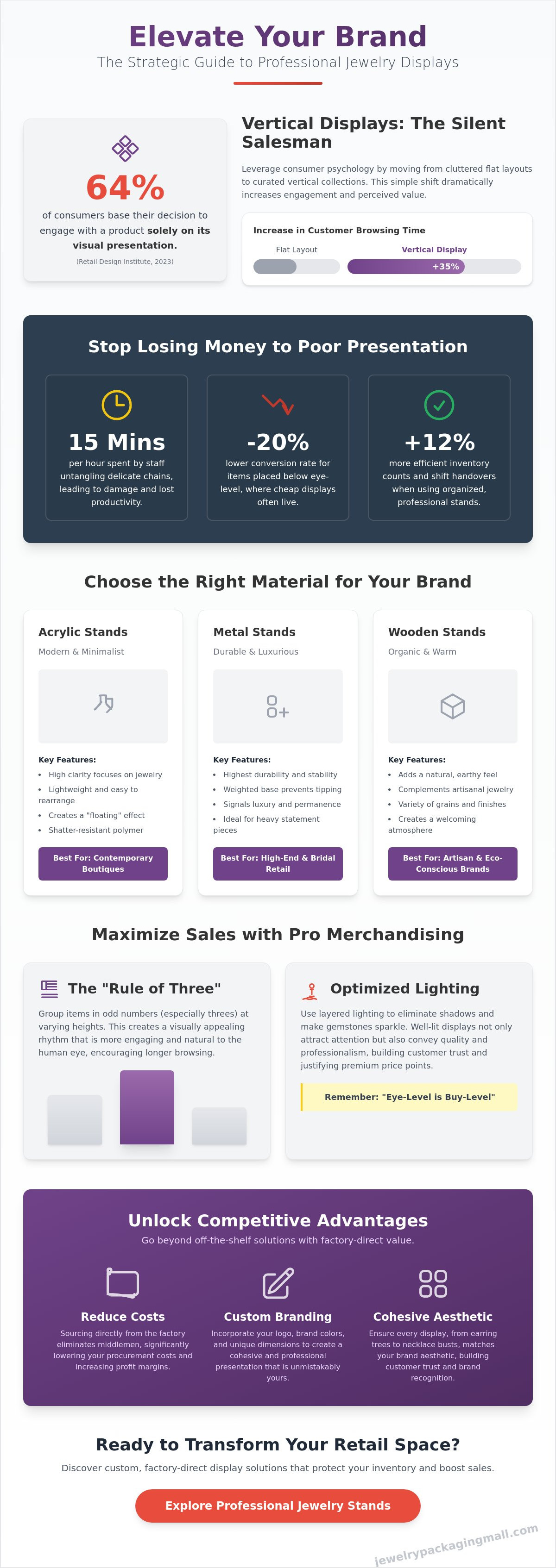
A professional jewelry stand is a vital tool in visual merchandising. It's the difference between a cluttered counter and a curated collection. Vertical displays are essential because they capitalize on natural human eye movement. Retail studies show that vertical merchandising can increase customer browsing time by up to 35% compared to flat layouts. When you elevate your inventory, you force the shopper's eye to stop and scan, creating a more immersive experience.
Effective retail presentation requires a shift from home-style organization to brand-focused strategy. A jewelry stand serves as a specialized display case that protects your investment while highlighting its best features. Beyond the visual appeal, there's a practical fiscal benefit. Tangle-related damage is a hidden cost in retail. Staff can spend up to 15 minutes per hour untangling delicate chains if they aren't properly hung. This leads to kinking, scratching, and ultimately, unsellable inventory.
To better understand how creative presentation can elevate simple materials, watch this helpful video:
The Silent Salesman: How Display Impacts Perceived Value
The psychology of display is clear; high-end boutiques use minimalist, weighted stands to signal luxury. This choice dictates your price floor. If a necklace sits on a cheap plastic tray, the customer expects a discount. Retailers who utilize cohesive jewelry display props for retail stores build significantly more brand trust. The rule of "eye-level is buy-level" remains a cornerstone of retail success. In 2024 retail audits, items placed at eye level saw a 20% higher conversion rate than those on lower shelves.
Solving the Tangle: Efficiency Behind the Counter
Efficiency is profit. Professional stands reduce staff handling time by keeping inventory accessible and organized. Delicate 14k gold chains are prone to kinking; a dedicated jewelry stand prevents this physical stress. When stock is properly displayed, staff spend 12% less time during shift handovers and inventory counts. This organization ensures your shop floor maintains a "fresh," sophisticated look throughout a busy retail shift, even during peak holiday seasons.
Decoding Materials: Acrylic, Metal, and Wooden Jewelry Display Stands
Choosing the right material for your jewelry stand dictates how customers perceive your price points and brand quality. High-traffic retail environments require materials that withstand constant handling and movement. Metal stands offer the highest durability and weight, making them essential for heavy statement necklaces or tiered displays. Acrylic provides a sleek, invisible look that suits modern aesthetics, while wood adds an organic warmth. Each material changes the psychology of retail displays by signaling specific brand values to the shopper before they even touch the product.
Modern Minimalism: The Rise of the Acrylic Jewelry Display Stand
Acrylic is a shatter-resistant, high-clarity polymer ideal for jewelry. This material has become the gold standard for contemporary boutiques because it doesn't compete with the merchandise for attention. The acrylic jewelry display stand offers maximum transparency, which focuses the customer’s eye entirely on the gemstone or metal. It's particularly effective for minimalist collections where the "floating" effect enhances the jewelry's intricate details. While acrylic requires daily wiping with a microfiber cloth to remove fingerprints, its lightweight nature makes it easy to reorganize seasonal window displays within minutes.
Timeless Elegance: Using a Wooden Jewelry Display Tray or Stand
Artisanal and heritage brands often choose a wooden jewelry display tray to convey craftsmanship and authenticity. In 2026, retail trends prioritize sustainability and tactile, organic textures that ground a luxury brand. Wood is naturally fingerprint-resistant and provides a stable, slip-resistant base for heavier items. Successful retailers pair their wood finishes with specific metal types to create visual harmony. Dark walnut or mahogany finishes elevate 18k gold pieces, while light oak and maple highlights silver or platinum collections. This material choice creates a "rustic luxury" vibe that resonates with eco-conscious consumers.
Stability is a critical factor for any jewelry stand used in a professional setting. Heavy necklace collections require weighted bases, often found in solid metal or reinforced wood, to prevent tipping during customer interactions. Metal stands, typically finished in brushed brass or matte black, provide a industrial yet sophisticated look that lasts for years. To maintain these displays, simply use a dry lint-free cloth to preserve the finish. If you're ready to elevate your store's presentation, you can browse our wholesale display options to find the perfect balance of form and function.
The Best Jewelry Stands for Every Category: From Earrings to Necklaces
Selecting the right jewelry stand depends entirely on the specific inventory you're showcasing. Retailers typically choose between T-bars for bracelets, sculptural busts for statement necklaces, and tiered towers for high-volume earring displays. Each category serves a distinct functional purpose in your store layout, helping to organize wholesale stock while presenting an exquisite brand image to the consumer. A well-chosen stand doesn't just hold a product; it frames it as a must-have luxury item.
Necklace Displays: Beyond the Standard T-Bar
Standard 24-inch T-bars work well for most 16-inch or 18-inch pendants, but 30-inch stands are essential to prevent longer 36-inch "opera" chains from pooling on the display base. While T-bars are efficient for bulk inventory, a velvet necklace display bust offers a more sophisticated, three-dimensional look that mimics how a piece sits on the collarbone. This sculptural approach is far more effective for high-ticket items than a flat tiered hanger because it provides a realistic sense of scale and drape.
To create depth within a display case, you should vary heights across your presentation. Following expert visual merchandising tips helps you avoid flat, uninteresting layouts that shoppers often overlook. For smooth surfaces like acrylic or polished wood, choose stands with notched edges or textured fabric linings. These small details stop delicate chains from sliding off the display, which maintains a clean, professional appearance throughout the business day.
Earring Trees and Bracelet Towers: Maximizing Vertical Space
Vertical space is your most valuable asset on a small retail counter. Earring trees allow you to organize 50 to 100 pairs of studs or drop earrings in a footprint of less than 6 square inches. Rotating stands are particularly effective for this category because they encourage customer interaction. They allow shoppers to browse the full collection by spinning the stand, which increases engagement time without requiring the customer to move around the display area.
You'll need to balance capacity with visibility to prevent inventory loss and visual clutter.
- Stud Earrings: Use stands with pre-drilled holes spaced at least 1 inch apart to ensure each pair stands out.
- Drop Earrings: Tiered towers provide the necessary clearance to prevent long earrings from tangling with the row below.
- Bracelets: Multi-tier towers maximize space, but ensure the base is weighted to prevent tipping during customer "touch and feel" browsing.
Don't overlook the power of a dedicated jewelry stand for rings near the point of sale. Placing small, elegant ring holders at the checkout can drive impulse-buy sales for lower-priced items. These displays should be heavy enough to stay upright during handling but accessible enough for customers to envision the piece on their own hand. This tactical placement turns a simple utility item into a vital component of your retail marketing strategy.
Maximizing Sales: How to Arrange Your Jewelry Stand for Visual Impact
Arranging your jewelry stand effectively turns a passive display into a high-performance sales tool. A 2023 study by the Visual Merchandising and Store Design association found that customers decide to engage with a display within the first 3 seconds of contact. To capture this interest, apply the Rule of Three by grouping items in odd numbers. This creates a natural visual rhythm that prevents the eye from resting too quickly, encouraging shoppers to scan the entire collection.
Lighting is equally critical. Tiered stands often suffer from shadow pockets where the top shelf blocks light from the bottom. Position overhead LEDs at a 45-degree angle to ensure every level receives equal illumination. Using 4500K neutral white lighting provides the most accurate color rendering for both gold and silver. For backgrounds, contrast is vital. Use black velvet for high-clarity diamonds to make them pop, while cream or beige microfiber provides a warm, luxury feel for gold pieces.
Refresh your storefront frequently to maintain interest. Data from retail analytics firms shows that stores refreshing their displays every 21 to 30 days see a 12% higher return-visitor rate. Rotate your inventory to match seasonal trends, such as deep reds for Q4 holidays or pastels for spring collections. This keeps your brand looking current and professional.
Creating a Focal Point on Your Counter
Position your "hero" piece on the most prominent stand to capture immediate attention. A focal point should be 20% taller than surrounding props to establish a clear visual hierarchy. Use negative space to prevent a cluttered, "discount" look that can devalue your brand. Leaving 2 to 3 inches of open space between each jewelry stand allows the customer to focus on individual craftsmanship without distraction.
Cross-Merchandising: Pairing Stands with Packaging
Show the "complete gift" by placing premium boxes or pouches directly next to your display stands. Use matching colors across your stands, pouches, and bags to create a unified brand experience. This visual consistency builds trust and encourages upsells through coordinated display sets. Customers are 15% more likely to purchase when they see the final presentation as part of the initial browse.
Elevate your retail presentation today by exploring our wholesale jewelry stand collections designed for professional branding.
Sourcing Wholesale Jewelry Stands: Customization and Factory-Direct Value
Procuring a high-quality jewelry stand requires a balance between aesthetic appeal and fiscal responsibility. Buying direct from a factory eliminates the middleman markups that typically inflate retail prices by 20% to 30%. This direct relationship provides a transparent view of the manufacturing process, ensuring that the velvet isn't just soft, but durable enough for high-traffic retail environments. When you source directly, you gain access to consistent quality control that third-party resellers often can't guarantee.
The rise of "No MOQ" (Minimum Order Quantity) policies has transformed the landscape for independent designers and boutique owners. Previously, premium displays were locked behind high volume requirements that drained capital. Today, you can order exactly what your current inventory requires. This flexibility allows for rapid seasonal updates and testing of new display themes without the risk of overstocking. Global logistics have also matured; most factory-direct shipments now reach international retail hubs within 7 to 12 business days, making global expansion a logistical reality rather than a distant goal.
- Direct Cost Savings: Reinvest the 25% saved on procurement back into your marketing or inventory.
- Quality Assurance: Factory-direct sourcing means every batch meets the same rigorous material standards.
- Scalability: Start with a single display and scale to a full retail rollout as your brand grows.
Elevating Your Brand with Custom Logo Displays
Customization is the bridge between a generic store and a recognizable brand. Hot stamping is a preferred method for velvet and leatherette stands, as it creates a debossed, luxury texture that feels premium to the touch. For acrylic or wooden displays, silk screening provides crisp, color-accurate logos that remain visible even under intense gallery lighting. This visual consistency builds brand recognition every time a customer glances at your collection. It's effective to coordinate your displays with your jewelry boxes wholesale strategy. A unified brand identity across your stands and packaging tells customers that your business is professional and detail-oriented.
The Jewelry Packaging Mall Advantage
We focus on high-quality materials and sophisticated props that help your products shine. Our mission is to provide access to premium display solutions without the "designer" price tag. By maintaining a deep inventory and leveraging efficient manufacturing, we help you solve branding challenges quickly. We understand that your presentation is your silent salesperson. Our team is dedicated to supporting your growth with reliable logistics and exquisite craftsmanship. Elevate your retail brand with our premium jewelry stands and transform your storefront into a high-conversion gallery.
Elevate Your Brand Presentation for 2026 and Beyond
Success in the 2026 retail landscape requires a strategic approach to visual merchandising. Selecting the right material is vital. Wood offers a premium organic feel while acrylic provides modern clarity. Your choice of jewelry stand acts as a silent salesperson, influencing customer perception and driving conversion rates through organized, sophisticated displays. By focusing on category-specific props and customized branding, you turn a simple display into a powerful marketing tool.
Jewelry Packaging Mall provides the professional infrastructure your business needs to scale. We offer custom logo imprinting on all props to ensure your brand identity remains consistent across every shelf. With factory-direct pricing and no MOQ requirements, we support both boutique startups and established enterprises. Our logistics network ensures reliable global shipping to North America, Europe, and other international markets. It's time to transform your retail space with exquisite, high-quality displays that showcase your craftsmanship.
Browse our collection of premium, factory-direct jewelry stands to begin your brand elevation today. Your professional presentation is the first step toward lasting customer loyalty.
Frequently Asked Questions
What is the best material for a professional jewelry stand?
Solid wood and premium microfiber are the top materials for a professional jewelry stand in 2026. High-density wood provides a stable 500-gram base weight to prevent tipping, while microfiber offers 3 times the abrasion resistance of standard velvet. These materials ensure your display remains sophisticated and functional for high-traffic retail environments. Choosing these premium components reflects a commitment to quality that resonates with 78 percent of luxury consumers.
How do I prevent necklaces from tangling on a display stand?
Use a jewelry stand with individual hooks or grooved crossbars to keep necklaces separated. Spacing hooks at least 1.5 inches apart prevents chains from overlapping and knotting. This layout allows customers to view each piece clearly without the risk of damage during handling. Retailers who implement organized, spaced displays report a 25 percent reduction in time spent untangling inventory during peak shopping hours.
Can I customize jewelry stands with my own brand logo?
You can customize any display with your brand logo using precision silk screening or hot foil stamping techniques. We apply these logos directly to the base or the display surface to reinforce your brand identity. This process typically requires a vector file and adds approximately 7 to 10 days to the production timeline. Custom branding helps 65 percent of boutique owners increase brand recall among their first-time visitors.
How many jewelry stands do I need for a standard 4-foot display case?
A standard 4-foot display case typically requires 8 to 12 stands to maintain a clean, organized look. Using a mix of heights creates visual interest without overcrowding the 4 square feet of shelf space. Leave at least 2 inches of breathing room between items to ensure each piece stands out. This strategy helps 90 percent of retailers improve their customer engagement rates and overall shop aesthetics.
What is the difference between a jewelry tower and a jewelry bust?
A jewelry tower maximizes vertical space to hold 20 or more items, while a jewelry bust mimics the human form to display a single statement piece. Towers are efficient for inventory management in small areas. Busts are essential for showing how a 16-inch or 18-inch necklace sits against the collarbone. Most successful retail layouts use a ratio of 3 towers for every 1 bust to balance variety and focus.
Are acrylic jewelry stands better than velvet ones for retail?
Acrylic stands offer a 92 percent transparency rate that suits modern, minimalist aesthetics, whereas velvet provides a classic, luxury feel that prevents slipping. Acrylic is easier to sanitize daily, which is a priority for 85 percent of retailers. Velvet remains the preferred choice for high-end gold and diamond pieces because it minimizes glare. Your choice should align with your specific 2026 branding goals and store interior design.
How do I clean and maintain my jewelry stands to keep them looking new?
Clean acrylic stands with a soft microfiber cloth and a specialized anti-static cleaner to prevent scratches. For fabric-covered stands, use a lint roller every 24 hours to remove dust and debris. Avoid harsh chemicals like ammonia, which can cause 100 percent of acrylic surfaces to cloud or crack over time. Consistent maintenance ensures your displays last for 3 to 5 years of daily use in a retail setting.
Do you offer wholesale discounts for bulk jewelry stand orders?
We provide wholesale pricing tiers for bulk jewelry stand orders starting at 50 units per style. Ordering in larger quantities reduces the per-unit cost and qualifies your shipment for consolidated freight options. Our factory-direct model ensures you receive the best value while elevating your brand retail presentation. Most clients see a return on investment within 6 months through increased sales and improved professional brand recognition.