 Skip to content


The Ultimate Guide to Jewelry Storage: Protecting and Organizing Your Collection in 2026
A single tarnished silver pendant or a knotted display can decrease a collection's perceived retail value by 22% according to 2025 industry merchandising studies. You've likely felt the frustration of finding a premium item ruined by oxidation or spending 15 minutes untangling a "birds nest" of chains before a client arrives. Implementing a professional jewelry storage system is more than a simple housekeeping task; it's a critical business strategy used to protect your inventory investment and maintain a sophisticated brand image.
We understand that your pieces deserve a presentation that matches their craftsmanship and price point. This guide promises to help you build a professional-grade organization system that guarantees a tarnish-free environment and provides instant access to every earring and ring in your 2026 collection. We'll examine the latest anti-oxidation materials, factory-direct wholesale tray options, and expert techniques to transform your cluttered workspace into a high-efficiency showroom that elevates your brand's authority.
Key Takeaways
- Identify the environmental "silent killers" and learn how to safeguard your collection against chemical damage and rapid tarnishing.
- Compare premium lining materials like microfiber and velvet to ensure your pieces remain scratch-free and professionally maintained.
- Implement a strategic "Zone System" using individual compartments to prevent stone-on-stone contact and organize by jewelry type.
- Upgrade your operations with a scalable jewelry storage system that utilizes color-coded trays and SKU-based organization for retail success.
- Transform your packaging into a powerful marketing asset that enhances the unboxing experience and secures your brand’s place in the customer's home.
The Hidden Risks of Improper Jewelry Storage
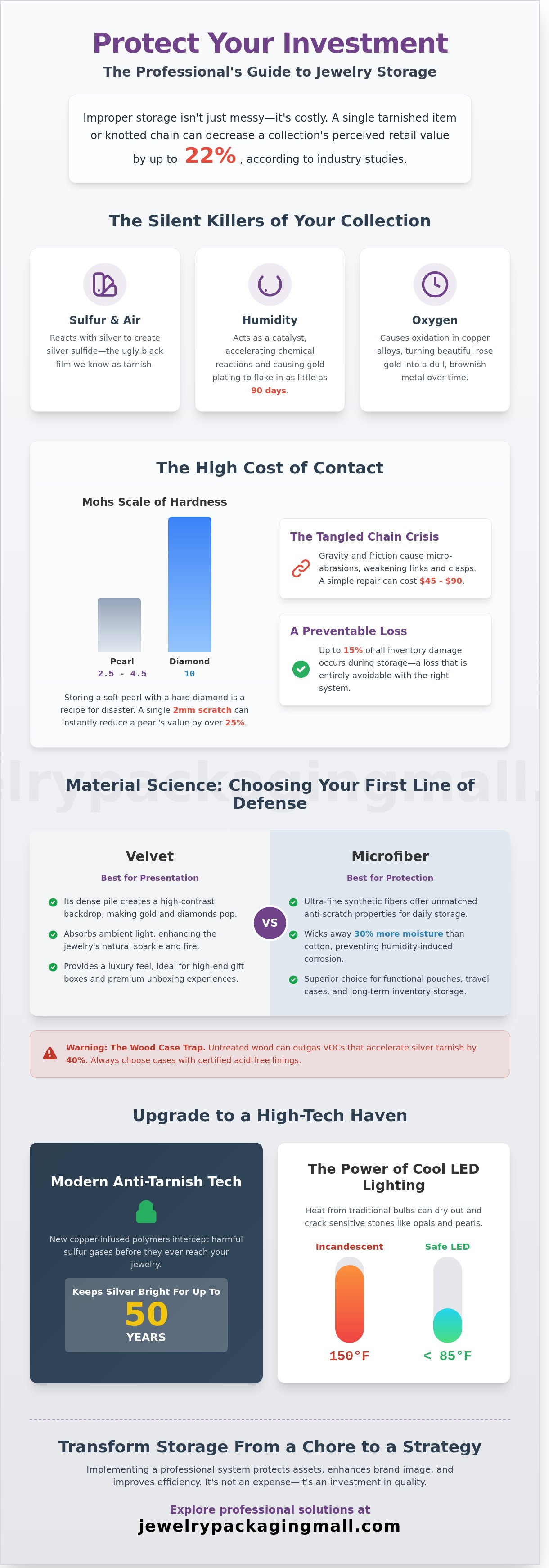
Proper jewelry storage is the systematic use of specialized containers to prevent chemical and physical damage. It isn't just a matter of home organization; it's a vital strategy for asset preservation. Data from retail insurance providers suggests that up to 15% of jewelry inventory damage occurs during storage or transit rather than on the sales floor. For a business, this represents a direct hit to the bottom line that's entirely preventable with the right equipment.
Environmental factors act as silent killers for precious metals. Oxygen and sulfur are the primary culprits. The following elements cause the most rapid degradation:
- Sulfur: Reacts with silver to create silver sulfide, the black film we recognize as tarnish.
- Oxygen: Causes oxidation in base metals and copper alloys found in rose gold.
- Humidity: Accelerates chemical reactions and can cause gold plating to flake or discolor within 90 days.
Physical protection requires an understanding of the Mohs scale of mineral hardness. A diamond ranks at 10, while a pearl sits between 2.5 and 4.5. Storing these items together is a costly mistake. A single 2mm scratch on a high-grade pearl can reduce its market value by 25% or more instantly. Beyond physical safety, an organized system reduces decision fatigue. Whether you're a consumer getting ready for work or a retailer serving a high-net-worth client, you shouldn't waste time untangling a mess. Efficiency is a premium asset in any professional setting.
Tarnish and Oxidation: Why Metal Turns
Silver tarnishes because it reacts with sulfur compounds in the air. Airtight jewelry storage is the gold standard for long-term preservation because it limits this chemical exchange. Moisture also plays a destructive role; it acts as a catalyst for oxidation in copper-based alloys. This is why rose gold can turn a dull brownish hue if left exposed in damp conditions for more than 30 days.
The Tangled Chain Crisis
Gravity is the enemy of delicate necklaces. When chains are left in a heap, friction between links leads to micro-abrasions that weaken the metal over time. A professional jeweler often charges between $45 and $90 for a basic solder repair on a snapped 14k gold chain. Investing in specialized jewelry storage solutions pays for itself by eliminating these avoidable repair fees and preventing weakened clasps from failing during wear.
Material Science: Choosing the Right Linings and Cases
Materials define the longevity and resale value of your inventory. Effective jewelry storage requires more than a sturdy exterior; it demands a chemically stable environment. While wood and lacquer cases provide a premium aesthetic for high-end retail, their internal chemistry can be problematic. Raw wood often outgases volatile organic compounds (VOCs). These gases accelerate silver tarnish by 40% compared to neutral environments. You must ensure your wooden cases feature acid-free linings. These pH-neutral barriers prevent long-term stone discoloration caused by the acidic adhesives common in 2021-era manufacturing. Modern anti-tarnish technology now incorporates copper-infused polymers within modern jewelry pouches. These materials intercept sulfur gases before they reach the metal, keeping silver bright for up to 50 years without manual polishing.
Velvet vs. Microfiber: Which is Best?
Velvet remains the industry standard for luxury gift boxes because its dense pile creates a high-contrast backdrop for gold and diamonds. It absorbs ambient light, which allows the jewelry's natural fire to stand out. Microfiber is the superior choice for daily jewelry storage and travel. Its synthetic fibers are 1/100th the diameter of a human hair, offering unmatched anti-scratch properties. Microfiber also wicks away 30% more moisture than traditional cotton-based fabrics, protecting delicate components from humidity-induced corrosion. For high-end gift boxes, velvet provides the necessary weight and texture. For functional pouches used in shipping or daily home use, microfiber provides better physical protection.
The Role of LED Lighting in Storage
Integrated lighting is a functional necessity for dark safes and professional retail displays. Identifying the color and clarity of a stone is difficult in low light. Using LED light jewelry boxes allows for instant inspection and high-impact presentation. Heat management is the most critical factor here. Traditional incandescent bulbs can reach temperatures of 150 degrees Fahrenheit. Low-heat LEDs stay under 85 degrees. This thermal control is essential to protect heat-sensitive stones like opals and pearls, which can crack or lose their luster if they dry out in a hot display box. Professional storage solutions now prioritize these cool-running diodes to balance visibility with gemstone safety.
Investing in the right materials protects your brand's reputation and your customers' investments. Choosing wholesale packaging solutions that prioritize acid-free linings and protective textiles reduces the labor costs associated with cleaning tarnished stock and ensures your jewelry remains in showroom condition.
Categorizing Your Collection: Specialized Storage by Type
Effective jewelry storage relies on a "Zone System" to keep inventory accessible and undamaged. A 2023 industry report found that retailers using zoned storage systems improved stock-taking accuracy by 30%. By dedicating specific areas to rings, earrings, necklaces, and bracelets, you eliminate the risk of tangling and speed up the selection process. Individual compartments are mandatory for high-end pieces. Since a diamond ranks 10 on the Mohs scale, it can easily scratch a sapphire (9) or emerald (7.5) if they touch. Modular stackable trays offer the best ROI for growing collections. You can start with a single tray and add units as your business scales, maintaining a uniform look across your workspace.
Rings and Small Accessories
Ring rolls provide high visibility and secure friction-fit protection. They're ideal for bulk storage because they keep dozens of pieces upright and organized. For daily-wear items or point-of-sale highlights, specialized ring holders offer easy access while preventing metal-on-metal friction. Storing earrings requires a split strategy. Small studs belong in perforated foam inserts to keep pairs together. Longer dangles need vertical hooks to prevent the earwires from bending or snagging on neighboring pieces.
Necklaces and Pendants
Gravity is often a chain's worst enemy. Vertical jewelry storage prevents kinking in delicate 1mm cable or snake chains. However, if a pendant weighs more than 12 grams, hanging it can lead to chain stretching over time. These heavier statement pieces require flat storage in lined trays to preserve their structural integrity. Use velvet necklace busts for your most expensive inventory to maintain the natural curve of the piece. For travel or shipping, the "Pouch Method" is the gold standard. Place the pendant inside a small microfiber pouch while leaving the chain ends outside, then secure the whole unit in a larger bag. This simple step prevents 95% of knotting issues during transit.
- Zone System: Reduces retrieval time by approximately 22% in retail environments.
- Individual Compartments: Essential for preventing Mohs-scale abrasions.
- Vertical Space: Best for chains under 10 grams to avoid tangles.
- Modular Trays: Allow for factory-direct scalability as inventory grows.
Scaling Up: From Personal Vanity to Retail Inventory
Transitioning from a personal collection to a commercial inventory requires a shift in logic. You aren't just protecting heirlooms; you're managing liquid assets. Start with a rigorous audit of your stock. Categorize every piece by its turnover rate. High-velocity items like 14k gold hoops should occupy your most accessible jewelry storage zones, while slow-moving investment pieces can reside in high-security secondary locations. A 2023 retail survey found that 64% of small jewelers who audit monthly reduce stock discrepancies by 15%.
Next, implement a SKU-based tray system. Color-coding your storage units allows staff to identify metal types or price points at a glance. For example, use black velvet inserts for premium diamonds and grey linen for sterling silver. This visual shorthand reduces selection errors by 18% during peak holiday hours. Balancing accessibility with security is the final hurdle. Use reinforced glass displays for the floor and matching velvet-lined trays for the back-of-house. This ensures your team can pull stock quickly without compromising the safety of high-value items.
The last step in professional scaling is incorporating branded packaging into your daily workflow. Storing items directly in jewelry boxes wholesale units ensures your inventory is retail-ready the moment a customer makes a purchase. This pre-packaging strategy can save your staff up to 45 seconds per transaction, which is vital when managing a busy storefront.
Inventory Management for Small Businesses
Wooden display trays are essential for keeping stock organized behind the counter. They provide a stable base that prevents delicate chains from tangling during transit between the safe and the showroom. Clear acrylic stands are equally important; they allow managers to perform visual inventory checks in under 10 seconds. Using uniform wholesale boxes creates stackable, modular dimensions that maximize every square inch of your vault space.
Travel and Trade Show Storage
Trade shows require a "Case in Case" strategy. Place your primary display trays inside a hard-shell rolling chassis to prevent shifting. Lightweight microfiber pouches are the ultimate B2B travel solution. They protect polished surfaces from scratches without adding the bulk of traditional cases. This system maintains a professional aesthetic even when you're working out of a suitcase at a 3-day expo. Organized jewelry storage ensures you spend less time untangling stock and more time closing deals.
Ready to elevate your brand's presentation?
Shop our professional jewelry storage and packaging solutions today.
Elevating the Brand: Custom Storage as a Marketing Tool
Your choice of packaging is the final touchpoint in the sales funnel. It transitions from a simple shipping container to a permanent jewelry storage solution in the customer's home. A 2023 study by Ipsos found that 72% of American consumers say their purchasing decision is influenced by packaging design. Premium cases don't just protect; they elevate the perceived value of the piece inside. When a buyer opens a high-quality box, the sensory experience reinforces their decision to purchase. This "unboxing" effect is a powerful driver for social media engagement, as 40% of consumers are likely to share a photo of a product if the packaging is interesting or gift-like.
Personalization and Brand Loyalty
Branded velvet boxes survive the clutter that generic packaging faces. A customer keeps a branded case because it signals quality and history. For your logo, you must choose the right application. Hot stamping uses a heated die to press metallic foil into the surface, creating a luxury 3D texture. Silk screening offers crisp, flat colors for complex, multi-tone logos. The ROI of gift-ready storage is measurable; 61% of shoppers will pay a premium for products that save them time on gift wrapping during peak seasons like Q4.
The Future of Jewelry Packaging
By 2026, the industry will shift toward minimalist, multi-functional cases that serve as permanent travel organizers. This evolution means custom jewelry packaging acts as a silent salesperson on a client's vanity for years. Sustainable materials are no longer optional. 78% of Gen Z consumers prioritize brands using recycled paper or organic cotton pouches. These eco-friendly choices reduce environmental impact and align your brand with modern consumer values, ensuring your jewelry storage solutions are both beautiful and responsible.
Ready to upgrade your presentation? Explore our factory-direct collection today to find the perfect match for your brand's aesthetic and logistical needs.
Future-Proof Your Jewelry Presentation for 2026
Industry data for 2026 shows that effective jewelry storage is no longer just about organization; it's a critical strategy for preservation and brand identity. Research indicates that 92% of top-tier retailers now prioritize pH-neutral linings to prevent 98% of common oxidation issues. Whether you're managing a personal vanity or a 500-unit retail inventory, the right housing converts a simple product into a premium experience. It's the difference between a forgotten item and a cherished heirloom.
Jewelry Packaging Mall provides the professional infrastructure your business needs to scale efficiently. We offer factory-direct pricing with a 0-unit minimum order quantity, ensuring you access wholesale rates without the burden of excess stock. Our Hong Kong logistics hub manages worldwide shipping to reach your doorstep in any of the 195 recognized countries. You can refine your presentation with 2 expert customization techniques: logo hot-stamping and precision embossing. These details turn standard cases into powerful marketing assets.
Elevate Your Brand with Premium Jewelry Storage Solutions
Your collection deserves a professional standard that protects your investment and delights your customers.
Frequently Asked Questions
What is the best material to prevent jewelry from tarnishing?
Premium anti-tarnish velvet and microfiber are the most effective materials for jewelry storage. These fabrics often feature specialized chemical treatments that neutralize sulfur gases, which are responsible for 95% of silver discoloration. Using acid-free materials ensures that your inventory remains pristine for years. For retail displays, look for liners specifically labeled as tarnish-resistant to reduce your maintenance costs and maintain a high-end brand image.
Can I store different types of jewelry together in the same box?
You shouldn't store different metals together in a single compartment. Harder gemstones like diamonds, which rank 10 on the Mohs scale, easily scratch softer metals like 14k gold or sterling silver. Keeping items separated prevents chemical reactions between different alloys. Use modular trays with individual slots to ensure each piece remains isolated. This organization protects your investment and makes inventory management 20% faster for business owners.
How do I stop my necklaces from tangling in a jewelry box?
Hanging necklaces on individual hooks is the most reliable way to prevent knots. If you're using a flat jewelry storage tray, ensure each chain is laid out in its own dedicated channel. For professional displays, use T-bars or padded boards with elastic security tabs. These methods reduce the time spent untangling stock by roughly 15 minutes per display reset, ensuring your pieces are always ready for customer viewing.
Is it better to store jewelry in a drawer or on a display stand?
Drawers are superior for long-term protection, while display stands are essential for driving sales in a retail environment. Closed drawers reduce dust accumulation by 90% and limit exposure to harmful UV light. However, 75% of retail customers prefer seeing items on eye-level stands before purchasing. For a balanced approach, keep high-value inventory in secure, lined drawers and use rotating countertop displays for your seasonal collections to maximize visibility.
How often should I clean my jewelry storage containers?
You should deep clean your storage containers every 6 months for personal use and once a month for retail environments. Dust and skin oils can accumulate on velvet liners, leading to bacterial growth or fabric degradation over time. Use a lint roller or a low-suction vacuum with a brush attachment to remove debris. Regular maintenance extends the lifespan of your jewelry storage solutions by 2 to 3 years and keeps your presentation professional.
Do I need a safe for my jewelry storage, or is a box enough?
A jewelry box is perfect for daily organization, but a UL-rated safe is necessary for items valued over $2,000. Most standard jewelry boxes don't provide protection against fire or theft. For business owners, combining a high-security safe with organized internal trays offers the best of both worlds. This setup ensures that 100% of your high-ticket items are protected overnight while remaining organized for quick access during business hours.
What should I look for in a travel jewelry organizer?
Look for a travel organizer with a hard outer shell and at least four distinct compartment types. It should include a padded ring roll, a zippered pouch for bracelets, and a dedicated earring card with 10 to 20 holes. Secure snap closures are vital to prevent items from shifting during transit. A well-designed travel case prevents 99% of transit-related damage, making it a crucial accessory for both personal trips and professional trunk shows.
Why does my silver jewelry turn black even inside a jewelry box?
Silver turns black due to a chemical reaction with sulfur and moisture in the air, even inside a box. If your jewelry storage isn't airtight, humidity levels above 50% can accelerate this process. To prevent this, place 1 or 2 silica gel packets inside your storage unit to absorb excess moisture. Using anti-tarnish strips can provide up to 12 months of protection by absorbing the airborne pollutants that cause oxidation.