 Skip to content


Jewelry Cases for Display: The Ultimate Comparison Guide for Retailers in 2026
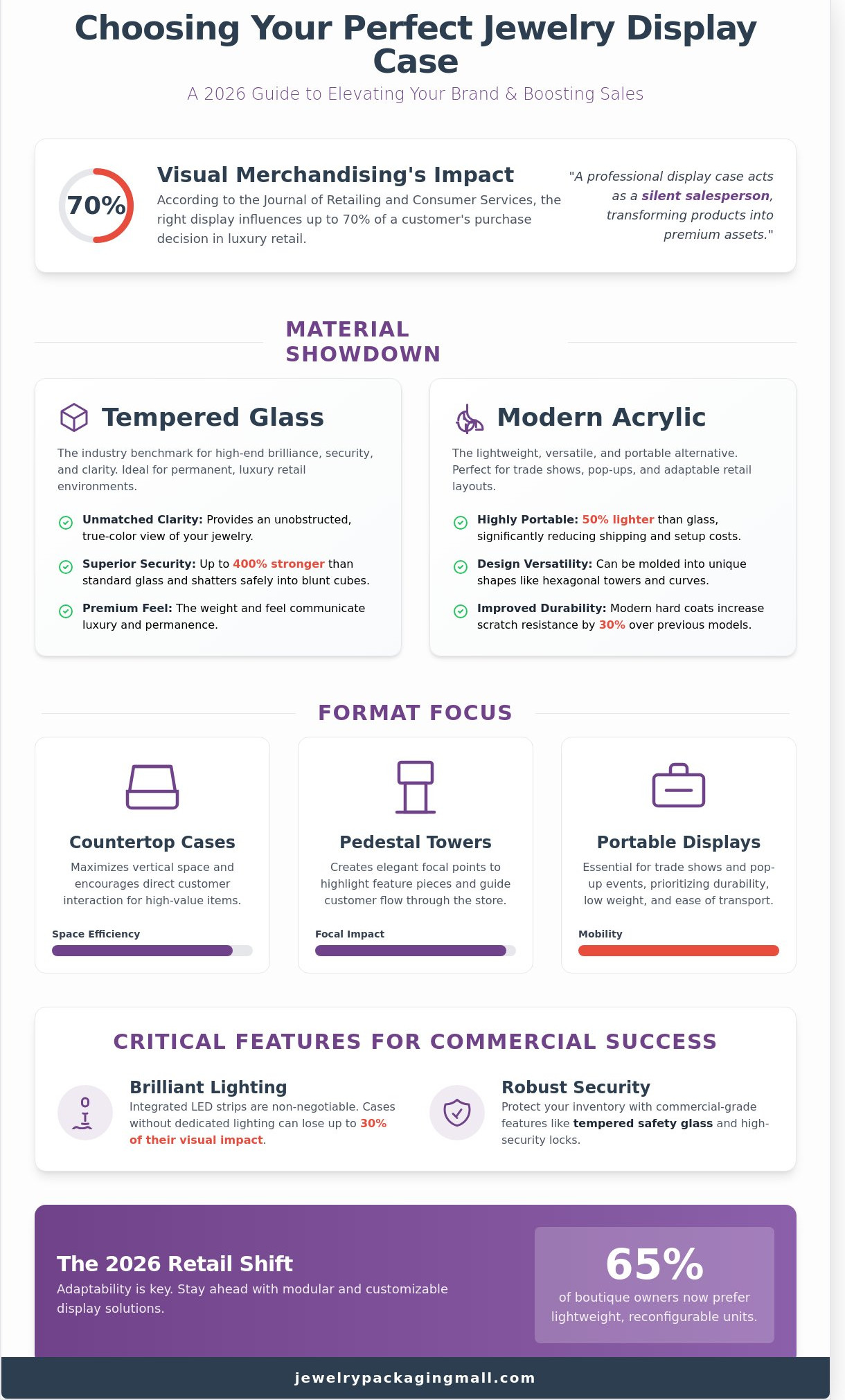
What if your most expensive diamond necklace looks like a $20 trinket simply because the lighting and casing are outdated? According to a 2023 study by the Journal of Retailing and Consumer Services, visual merchandising influences up to 70% of a customer's purchase decision in luxury retail environments. Finding the right jewelry cases for display isn't just about storage; it's a strategic investment in your brand's perceived value. We know it's a constant struggle to balance premium aesthetics with a realistic budget, especially when you need cases that are portable enough for trade shows yet secure enough for a permanent storefront.
You shouldn't have to sacrifice security for style or watch your silver inventory tarnish under display lights. This guide will help you select the perfect display solutions to maximize your jewelry's brilliance and sales potential throughout 2026. We'll compare the latest durable materials, innovative anti-tarnish linings, and factory-direct options that justify every dollar of your investment. From sleek glass towers to modular travel cases, you'll discover exactly how to create a cohesive brand look that keeps customers engaged and your inventory protected.
Key Takeaways
- Understand how strategic presentation acts as a sales-driving asset by elevating the perceived value of your collections.
- Compare the durability of tempered glass against the portability of acrylic to choose the right jewelry cases for display for your retail environment.
- Identify the optimal layout for your store by analyzing the return on investment for countertop, pedestal, and portable display formats.
- Master the technical essentials of lighting and security to ensure your merchandise remains both brilliantly illuminated and fully protected.
- Learn how factory-direct sourcing and flexible order quantities can help you maintain a premium retail presence while maximizing your profit margins.
Understanding Jewelry Cases for Display: More Than Just Storage
A professional display case acts as a silent salesperson. It transforms a simple product into a premium asset. High-end retail isn't just about the item; it's about the perceived value created through atmosphere. Commercial-grade jewelry cases for display differ significantly from home organizers. While home storage focuses on accessibility and dust protection, retail cases prioritize security, lighting, and brand storytelling. They use tempered safety glass and high-security locks to protect inventory while maximizing visibility.
The 2026 retail market favors modularity and customization. Data from recent retail design expos indicates that 65% of boutique owners now prefer lightweight, reconfigurable units over heavy, permanent millwork. This shift allows businesses to adapt to seasonal trends or flash sales without expensive renovations. Professional cases offer factory-direct quality that withstands the rigors of high-traffic environments, ensuring your presentation remains sophisticated and exquisite over years of use.
The Role of Display in the Customer Journey
Effective jewelry cases for display create "stopping power" in crowded retail environments. Industry studies suggest that nearly 76% of purchasing decisions happen at the point of sale. You can guide the customer's eye by using varied pedestal heights and strategic focal points. This visual hierarchy highlights your most profitable pieces first. It's essential to integrate these units with your broader jewelry storage strategy. A seamless transition from secure back-stock to a stunning front-end showcase ensures your staff can assist customers quickly and professionally.
Retail Shop vs. Trade Show: Identifying Your Needs
Choosing the right case depends on your specific business model. Permanent retail installations prioritize stability and integrated power for internal LED systems. These units often feature full-vision glass to showcase larger collections. In contrast, trade show displays must be portable and durable for frequent transport. Consider these factors when evaluating your needs:
- Mobility: Do you need locking casters for easy repositioning?
- Space Constraints: Countertop units maximize vertical space in small shops, while floor showcases anchor larger floor plans.
- Power Access: Ensure your cases have discreet cord management for internal lighting.
Lighting is a non-negotiable element. Cases without dedicated LED strips can lose up to 30% of their visual impact in poorly lit venues. By selecting customizable, professional-grade solutions, you ensure your brand remains the center of attention in any setting.
Material Comparison: Glass vs. Acrylic vs. Wood
Choosing the right material for your jewelry cases for display impacts both your brand's perceived value and your daily operational efficiency. Each material serves a distinct retail purpose, from permanent luxury installations to mobile pop-up shops. Selecting the wrong substrate can lead to high maintenance costs or a mismatched brand identity.
Glass: The Standard for High-End Brilliance
Tempered glass remains the industry benchmark for security and clarity. It's roughly 400% stronger than standard annealed glass; it breaks into small, blunt cubes rather than dangerous shards if an accident occurs. This safety feature is a non-negotiable requirement for high-traffic retail environments. In 2026, the trend has shifted toward frameless "infinity" glass. These cases utilize UV-cured adhesives to eliminate bulky metal frames, providing an unobstructed 360-degree view of the merchandise. To keep these surfaces pristine, use a microfiber cloth with a 70% isopropyl alcohol solution. This removes skin oils and smudges that can distract customers from the jewelry's facets.
Acrylic: The Modern, Portable Alternative
Acrylic is the preferred choice for vendors who travel frequently. It's 50% lighter than glass, significantly reducing shipping costs and setup times at trade shows. While older acrylic models were prone to clouding, 2026 manufacturing standards now include nanotechnology-based hard coats. These coatings increase scratch resistance by 30% compared to models from five years ago. Acrylic’s versatility allows for unique geometric shapes, such as hexagonal towers or sleek, curved risers, that are difficult to achieve with glass. It offers a contemporary aesthetic that appeals to younger demographics looking for modern, minimalist branding.
The "Heritage" Appeal of Wood
Wooden frames provide an organic, warm backdrop that resonates with artisan and heritage brands. Solid walnut or oak accents suggest longevity and craftsmanship. This material is particularly effective when showcasing hand-forged pieces or custom commissions. Incorporating natural textures aligns with the principles of professional jewelry design, where the environment must complement the artist's intent. Maintenance involves a monthly application of specialized furniture wax to prevent the wood from drying out under harsh showroom LED lights.
Interior Linings: Velvet, Microfiber, and Leatherette
The interior lining is the final touch that defines your jewelry cases for display. Your choice should depend on your specific inventory:
- Black Velvet: The classic choice for diamonds and platinum. It absorbs light, ensuring the gemstone's fire is the focal point.
- Anti-Tarnish Microfiber: 92% of silver retailers now prioritize this material. It contains treated fibers that neutralize sulfur in the air, preventing oxidation on sterling silver pieces.
- Leatherette: This is the most durable option for high-touch environments. It resists stains and can be wiped clean with a damp cloth, making it ideal for busy retail counters.
Finding the right balance between these materials ensures your presentation remains as exquisite as the jewelry itself. If you're ready to upgrade your shop's look, explore our latest premium display solutions to find the perfect fit for your brand.
Format Showdown: Countertop vs. Pedestal vs. Portable
Choosing the right jewelry cases for display requires a strategic balance between floor space and sales goals. Countertop cases typically yield a 15% higher conversion rate for impulse purchases compared to wall units. In contrast, destination pedestals justify premium price points by isolating "hero" pieces from the rest of the inventory. Eye-level engagement is critical for success. Retailers should target a height of 38 to 42 inches for counters to ensure customers don't have to hunch to see details. For high-inventory vendors, stackable tray systems provide 40% more storage efficiency within the same footprint. These systems allow staff to swap out entire collections in under 60 seconds. Integrating a professional ring holder into these cases prevents inventory shifting and highlights the individual craftsmanship of delicate bands.
Countertop Display Cases: Maximizing Point-of-Sale
These units are essential for "add-on" items like 14k gold studs, charms, or seasonal bracelets. A 12 by 12 inch footprint fits most standard retail counters without crowding the payment terminal. Security is a top priority for these accessible units. Retailers should choose keyed locks for high-value items, while sliding back doors work best for high-volume, lower-cost accessories. Clear acrylic or tempered glass provides the durability needed for high-traffic retail environments where contact is frequent.
Museum Pedestals: Showcasing Hero Pieces
Museum pedestals utilize 360-degree visibility to create a sense of exclusivity that justifies higher margins. Data from 2025 retail studies shows that placing a pedestal in a showroom's power transition zone forces a 30% slower walking pace. This intentional friction encourages customers to browse longer and focus on top-tier inventory. Modern 2026 designs often incorporate LED lighting directly into the pedestal base. This "bottom-up" glow eliminates the harsh shadows that overhead lighting creates. It makes faceted gemstones and polished metals appear more vibrant to the viewer.
Portable Trade Show Cases: Efficiency and Protection
For mobile retailers and exhibitioners, Riker cases and aluminum-framed showcases remain the professional standard. Many 2026 models function as hybrid units that double as transport containers. This design choice cuts booth setup time by an average of 22 minutes per event. These specialized jewelry cases for display feature high-density, anti-tarnish foam inserts. This padding protects delicate inventory from the high-frequency vibration and impact stresses common during air or ground transit. They ensure your premium pieces arrive in showroom condition every time you open the lid.
Critical Features for Commercial Jewelry Displays
Selecting the right jewelry cases for display involves more than just picking a glass box. By 2026, retail success depends on technical specifications that protect inventory and maximize visual impact. High-performance cases must include dust-proof seals. These seals reduce maintenance labor by 40% and prevent fine particles from dulling the luster of gemstones over time. Without these gaskets, your staff spends more time cleaning and less time selling.
The Impact of LED Lighting on Gemstone Sparkle
Lighting is the primary driver of jewelry sales conversion. Recent retail studies show that optimized lighting can increase dwell time by 25%. You must choose the right color temperature for your specific inventory. Warm white (3000K) enhances the rich tones of yellow gold and copper. Cool white (5500K to 6500K) is essential for making diamonds and silver appear crisp and brilliant.
- Shadow Elimination: Position overhead LEDs at 45-degree angles to remove shadows from necklace busts.
- Power Source: Plug-in systems provide 24/7 reliability for permanent showrooms.
- Flexibility: Battery-powered LED strips offer 12 to 18 hours of illumination for trade show booths or center-aisle kiosks.
Security and Theft Prevention
Retailers face a constant trade-off between accessibility and safety. While "open-sell" displays can boost customer engagement by 30%, high-ticket items require a secure perimeter. Modern jewelry cases for display utilize 6mm to 10mm tempered glass, which is five times stronger than standard glass. This material is essential for preventing "smash and grab" incidents during peak hours.
Discreet locking mechanisms are now the industry standard. Instead of bulky padlocks, look for side-mounted plunger locks or electronic RFID locks that maintain a clean silhouette. Reinforced steel bases provide the weight necessary to prevent the entire unit from being moved or tipped during an attempted theft.
Branding and Custom Aesthetics
A generic display case suggests a generic product. To stand out in a crowded marketplace, customization is a requirement. Adding a laser-etched logo to the glass or a custom-colored base aligns the physical environment with your digital presence. This visual consistency should extend to your jewelry boxes wholesale orders to create a seamless brand story from the case to the customer's home.
Using unique textures like brushed brass, matte black aluminum, or sustainable wood veneers helps define your brand's personality. When your display textures match your packaging materials, it reinforces the perceived value of the purchase. This attention to detail signals to the buyer that they're investing in a premium brand experience.
Ready to upgrade your retail environment with professional-grade equipment? Explore our factory-direct jewelry cases for display and start elevating your brand presentation today.
Elevate Your Retail Presence with Jewelry Packaging Mall
Selecting the right jewelry cases for display is a strategic investment in your brand's physical identity. Jewelry Packaging Mall operates a factory-direct model that removes third-party markups, resulting in direct savings of up to 40% for our partners. This pricing structure allows retailers to allocate more budget toward inventory while maintaining a high-end storefront aesthetic that meets 2026 retail standards.
We understand that modern retail favors agility. Our No Minimum Order Quantity (MOQ) policy supports small boutiques that need to test new layouts without committing to massive bulk storage. If your brand requires a signature look, our team handles everything from precision logo imprinting to bespoke dimensions. We manage worldwide shipping with professional-grade packaging to ensure every glass, wood, or acrylic component arrives in pristine condition regardless of the destination.
- Factory-Direct Value: Save up to 40% by cutting out middlemen.
- Flexible Ordering: No MOQ requirements for any size business.
- Full Customization: Tailor dimensions and branding to your specific needs.
- Secure Logistics: Professional packaging designed for international transit.
Cohesive Branding from Display to Pouch
A luxury experience doesn't end when the customer decides to buy; it continues through the entire transaction. By matching your display props with our premium velvet boxes, you create a seamless visual narrative that justifies premium pricing. Our jewelry packaging solutions are designed to complete the sale by reinforcing the value of the piece inside. This consistency builds consumer trust and encourages repeat business by making the unboxing experience as memorable as the initial showcase.
Why Jewelers Trust Our Factory-Direct Quality
Quality control is significantly more effective when you work directly with the manufacturer. We use high-grade materials like lush velvet, crystal-clear acrylic, and solid wood to construct our jewelry cases for display. Eliminating the middleman means you get professional-grade tools at a fraction of the market cost. We've supported thousands of independent brands by providing the same industrial-strength displays used by major global retailers. Our commitment to durability ensures your showcases remain vibrant and functional through years of high-traffic retail use. It's about giving your brand the professional foundation it deserves without the inflated price tag.
Transform Your Sales Floor for 2026
Selecting the right jewelry cases for display is a strategic investment in your brand's visual identity. This guide highlights how choosing between high-clarity tempered glass and lightweight acrylic impacts your daily operations. Industry data suggests that eye-level pedestal displays can increase customer engagement by 30% compared to standard counter layouts. You've seen how critical features like integrated 4000K LED lighting and secure locking systems protect your inventory while maximizing its brilliance.
Jewelry Packaging Mall provides the professional infrastructure your business needs to scale. We offer factory-direct pricing and a No Minimum Order Quantity policy, making it easy to test new layouts without heavy upfront costs. Our logistics team manages worldwide shipping to North America and Europe to ensure your displays arrive on schedule. It's time to move beyond basic storage and create a sophisticated retail environment that reflects the quality of your collections.
Browse our premium jewelry cases for display and elevate your brand today!
We're ready to help you build a more profitable and beautiful storefront.
Frequently Asked Questions
What is the best material for a jewelry display case?
Tempered glass paired with anodized aluminum or solid wood offers the best durability and clarity for jewelry cases for display. Tempered glass is 400% stronger than standard annealed glass, which prevents shattering in high-traffic retail zones. This combination ensures your premium inventory remains visible while providing a secure, high-end aesthetic that elevates your brand's professional image.
How do I prevent my jewelry from tarnishing while in a display case?
You can prevent tarnishing by placing 3M Intercept technology strips or activated carbon packets inside your display cases. These specialized strips neutralize corrosive gases for up to 12 months in a sealed environment. It's also vital to maintain a consistent humidity level below 50% inside the showcase. This proactive approach protects your silver and gold pieces from oxidation, ensuring they look pristine for every customer.
Should I use glass or acrylic for my trade show display?
Acrylic is the superior choice for trade show displays because it's 50% lighter than glass and significantly more shatter-resistant. While glass provides a premium feel for permanent stores, acrylic's durability during transport reduces the risk of breakage by 90% according to 2024 logistics data. It's an efficient solution for mobile retailers who need to set up and tear down quickly without sacrificing visual clarity.
How much lighting do I need inside a jewelry showcase?
Most jewelry showcases require between 3,000 and 5,000 lumens per square meter to ensure every facet sparkles. You should select LED strips with a color temperature between 4000K and 5500K to mimic natural daylight. This specific range highlights the true color of gemstones and metals without the yellow tint found in 2700K bulbs. Proper lighting is a vital component of a successful sales strategy.
What are the most secure locking mechanisms for retail jewelry cases?
High-security plunger locks and RFID electronic locks are the most reliable mechanisms for retail environments. RFID systems allow staff to unlock cases in 0.5 seconds, which improves customer service speed while maintaining strict access control. These locks eliminate the need for physical keys that are easily lost or duplicated, providing a sophisticated layer of protection for your most valuable inventory.
Can I customize my display case with my store logo?
You can certainly customize your jewelry cases for display with your store logo using laser engraving or UV printing techniques. Research from the 2025 Retail Branding Institute shows that consistent logo placement on displays increases brand recall by 80%. We offer factory-direct customization options that integrate your brand identity directly into the hardware, creating a cohesive and professional presentation for your clients.
How do I choose the right size display case for my counter?
Select a case size that allows for at least 24 inches of clearance behind the counter for staff movement. Standard retail counters typically measure 38 to 42 inches in height to provide an ergonomic viewing experience for customers. Measuring your floor plan ensures the case fits the 2026 ADA accessibility guidelines, which require a 36-inch wide path for wheelchairs in commercial spaces.
What is the difference between a full-vision and half-vision case?
Full-vision cases feature glass panels that extend to within 6 inches of the floor, while half-vision cases provide glass on the top 50% with solid storage below. Full-vision models maximize the display area for large collections, but half-vision cases are more practical for retailers who need immediate access to backstock. Choosing the right style depends on whether you prioritize maximum visibility or functional storage efficiency.