 Skip to content


How to Design a High-Conversion Jewelry Showcase Display: The 2026 Professional Guide
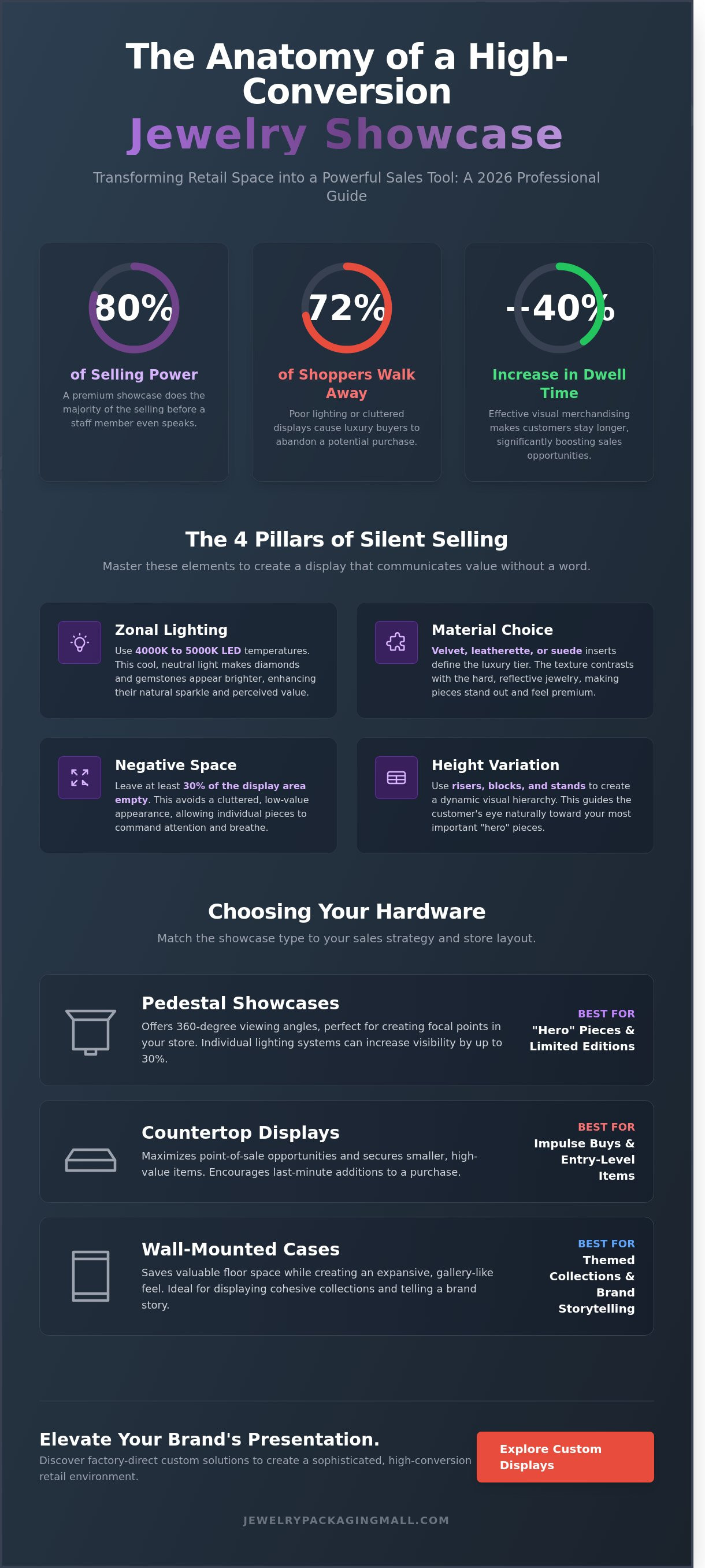
A premium jewelry showcase display does 80% of the selling before your staff even says hello. In a 2024 retail study, 72% of luxury shoppers admitted that poor lighting or cluttered arrangements directly caused them to walk away from a purchase. You've likely felt the frustration of watching an exquisite diamond look dull under weak bulbs or seeing your brand's identity get lost in a sea of mismatched risers. It's a difficult balance to strike when you need to protect high-value inventory while maintaining a welcoming, accessible atmosphere.
We agree that your presentation should be as sophisticated as the gems you sell. This 2026 professional guide gives you the exact framework to transform your retail space into a high-conversion sales tool. You'll learn how to implement visual merchandising strategies that can increase customer dwell time by 40% and create a cohesive store aesthetic. We'll explore the latest in factory-direct display technology, lighting precision, and security-focused design to ensure your brand stands out in a competitive market.
Key Takeaways
- Leverage the psychology of luxury presentation to transform your retail space into a sophisticated environment that boosts perceived product value.
- Evaluate the performance of various hardware configurations and materials to ensure your jewelry showcase display provides maximum clarity and security.
- Apply professional design principles like the "Rule of Three" and strategic negative space to eliminate clutter and highlight your most exquisite pieces.
- Follow a professional setup and maintenance checklist to ensure every presentation remains spotless and perfectly aligned with your seasonal brand themes.
- Discover how factory-direct custom branding and strategic sourcing can elevate your professional image while optimizing your procurement budget.
The Fundamentals of Effective Jewelry Showcase Displays
A jewelry showcase display functions as a high-stakes conversion tool rather than a simple piece of retail furniture. It serves as the primary interface between your brand and the consumer, dictating the perceived value of every diamond or gemstone inside. When a customer approaches a display, they make a subconscious judgment about luxury and price point within 3 seconds. High-impact retail displays differ from functional storage because they prioritize narrative and lighting over product density. By selecting appropriate types of display cases, such as pedestal or wall-mounted units, retailers can reduce buyer friction and establish immediate brand trust.
To better understand how to select high-end presentation tools, watch this helpful video:
The Role of Visual Merchandising in 2026
Physical retail remains the cornerstone of luxury. Data from industry analysts suggests that even as digital sales grow, over 75% of high-end jewelry consumers still demand a tactile in-store experience before purchasing. In 2026, your jewelry showcase display must work harder to create "instagrammable" moments that bridge the gap between offline and online worlds. This aesthetic consistency should extend from the glass case directly to your jewelry packaging strategy. When the display matches the box the customer takes home, it reinforces the brand's premium positioning and professional scale.
Why Your Showcase is Your Best Salesperson
A well-curated display acts as a silent salesperson. It communicates price points and brand authority without a single word from your staff. Grouping products strategically guides the customer journey, leading them from entry-level pieces to high-ticket items. This concept of "silent selling" uses negative space and focused lighting to highlight specific collections. It's a method that ensures your team can focus on closing the sale rather than explaining the basic value proposition. By utilizing factory-direct display solutions, you ensure a sophisticated look that aligns with your specific B2B logistics and retail goals. Consider these key elements for your next setup:
- Zonal Lighting: Use 4000K to 5000K LED temperatures to make diamonds pop.
- Material Choice: Velvet or leatherette inserts define the luxury tier of the product.
- Negative Space: Leave 30% of the display area empty to avoid a cluttered, low-value appearance.
- Height Variation: Use risers to create a visual hierarchy that leads the eye toward your "hero" pieces.
Effective displays don't just hold jewelry; they frame it as an essential acquisition. Moving from functional storage to high-impact retail presentation is the fastest way to elevate your brand's market standing and increase your average transaction value.
Choosing the Right Showcase Hardware and Materials
Selecting hardware is a foundational step in your retail strategy. Your hardware choice dictates how customers interact with your inventory. A well-placed jewelry showcase display serves as a silent salesperson. Retail data from 2023 indicates that strategic floor plans can increase dwell time by up to 15%. Security remains a top priority. High-value pieces require reinforced frames and locking mechanisms that don't compromise visibility. You'll need to balance the physical footprint with the level of protection required for your specific price points. Modern retailers often mix configurations to guide the customer journey through the store effectively.
Pedestal vs. Countertop vs. Wall-Mounted Cases
Pedestal showcases work best as focal points for high-ticket items. These units highlight "hero" products or limited editions by offering 360-degree viewing angles. Pedestal cases often feature individual lighting systems that increase product visibility by 30% compared to ambient room lighting. Countertop displays maximize impulse buys near the register. These units facilitate close-up inspections where 85% of jewelry sales are finalized. Wall-mounted cases save valuable floor space. They maintain a premium gallery feel while keeping high-traffic areas clear for movement. This configuration often increases usable floor area by 20% in smaller boutiques.
Material Selection: Aesthetics and Security
Material choice impacts both brand perception and safety. Wood finishes create a warm, vintage atmosphere perfect for heritage brands or artisanal collections. These materials evoke a sense of tradition and craftsmanship. Modern aluminum or stainless steel frames offer a sleek, minimalist look that appeals to contemporary shoppers. These metals are preferred for their durability and low maintenance. Stainless steel provides superior structural integrity compared to softer metals or wood laminates. When you compare jewelry cases for display, security levels often dictate the final decision.
Glass remains the industry standard for high-end retail. Tempered safety glass is 4 times stronger than standard annealed glass. It crumbles into small, blunt cubes if broken, which reduces liability risks in busy showrooms. Acrylic is a lightweight alternative, but it yellows over time and scratches easily. It lacks the premium weight and crystal-clear transparency of glass. Most luxury retailers stick to glass to ensure longevity and clarity. If you're looking to upgrade your store's aesthetic, consider how customizable display solutions can transform your presentation. Choosing the right combination of materials ensures your jewelry showcase display is both beautiful and secure.
The Art of Arrangement: Visual Hierarchy and Lighting
A high-performing jewelry showcase display relies on the balance between what's visible and what isn't. Retail studies indicate that 20% to 30% negative space is necessary to prevent visual fatigue. When a case is overcrowded, customers can't easily distinguish between a standard piece and a premium investment. By isolating a single focal point, usually positioned at the 54-inch eye-level mark, you command the viewer's attention instantly. Use varying heights with risers to create a landscape that mimics natural eye movement, typically moving from top-left to bottom-right across the case.
Mastering the Rule of Three and Pyramid Grouping
The human brain naturally seeks patterns. The Rule of Three exploits this by creating a sense of completion without the static feel of even pairs. Odd numbers of items create a visual tension that keeps the eye moving. Grouping items in a pyramid shape; with the tallest item in the center or back; leads the eye upward toward your most valuable inventory. This structure works best when you integrate a ring holder to anchor smaller collections. It provides a stable base that elevates the product, making it feel more significant than if it were laying flat on the velvet. This technique creates a professional jewelry showcase display that feels curated rather than cluttered.
- Odd Numbers: Groups of 3 or 5 prevent the "mirror effect" that makes displays look boring.
- Pyramid Scaling: Place larger neck forms in the rear and smaller accessories in the front to ensure every item is visible.
- Focal Points: Dedicate the center of the pyramid to a high-margin "hero" product.
Lighting Techniques to Enhance Gemstone Sparkle
Lighting is the final touch that converts browsers into buyers. Diamonds require a color temperature between 4000K and 5500K to mimic natural daylight. This specific range prevents stones from looking yellow or dull, which often happens under standard 2700K warm bulbs. A Color Rendering Index (CRI) of 90 or higher is non-negotiable for professional retailers. It ensures that gold looks rich and gemstones like rubies or sapphires retain their true color saturation under the glass.
Effective lighting requires a mix of ambient and directional sources. While ambient lighting provides a general glow, directional spotlighting is what creates the "scintillation" or sparkle in faceted stones. Positioning overhead LEDs at a 45-degree angle helps eliminate shadows inside the case. This setup ensures that even the items tucked in the corners receive enough light to attract interest. It's a simple adjustment that can increase the perceived value of your inventory by 15% to 20% based on visual appeal alone.
Step-by-Step: How to Set Up a High-Conversion Showcase
Creating a high-conversion jewelry showcase display requires a systematic approach that balances aesthetics with retail psychology. Every square inch of your cabinet influences a customer's decision to buy. Before any product touches the shelf, ensure your glass is pristine. Retail data indicates that even minor smudges can decrease a shopper's perceived value of luxury goods by nearly 18%. Use microfiber cloths and streak-free cleaners to maintain a professional standard that reflects the quality of your brand.
Theme Development and Color Coordination
Start with a cohesive visual narrative. If you're showcasing sterling silver, black velvet or deep navy inserts create a high-contrast backdrop that makes the metal pop. For gold pieces, cream or soft beige tones suggest warmth and luxury. Your theme should remain consistent with your broader jewelry storage and organization strategy. Avoid over-cluttering with seasonal props; a single sprig of holly or a minimalist geometric shape is often more effective than a crowded scene that distracts from the inventory.
Layering with Props: Busts, Trays, and Stands
Effective displays use vertical space to guide the eye. Position neck busts at the rear to showcase how necklaces drape and interact with light. Use tiered trays in the middle ground to organize collections by gemstone type or metal purity. Mixing materials adds a sophisticated edge to your jewelry showcase display. Try combining natural walnut wood trays with clear acrylic stands to appeal to modern tastes. This layering technique ensures that every piece is visible from the front of the case without being obscured by other items.
Once the inventory is set, test the customer's perspective. Walk the retail floor and view the case from the height of an average shopper, which is approximately 5 feet 4 inches for female demographics. Check for "dead zones" where lighting might create glare or shadows. Adjust your LED spotlights to hit the facets of your primary stones directly. Before finishing, perform a final quality check to ensure the environment is both safe and visually optimized:
- Test every security lock to ensure they're functional and discreet.
- Adjust LED spotlights to eliminate shadows on the primary focal points.
- Clean the glass one last time to remove fingerprints from the setup process.
- Verify that price tags are tucked away or neatly aligned.
A secure case doesn't just protect your assets; it signals to the customer that the items inside are valuable and worth the investment.
Ready to transform your retail space? Explore our collection of premium jewelry display tools to elevate your brand today.
Elevating Your Brand with Custom Showcase Solutions
Generic displays often disappear into the background. They serve a function but fail to tell your unique story. Transitioning to a bespoke brand experience ensures that every jewelry showcase display acts as a silent salesperson. Custom-branded props reinforce brand recall every time a customer leans in to inspect a piece. When a shopper sees your logo etched into a display block or a ring riser, they associate your merchandise with professional authority. This consistency builds the trust necessary for high-ticket sales.
Factory-direct sourcing provides a distinct competitive edge for retail owners. By removing middleman markups, you access premium materials like high-density resins and anti-tarnish microfibers at a lower cost. Independent boutique jewelers often face high entry barriers with traditional wholesalers who demand bulk purchases. "No MOQ" options change this dynamic. These flexible ordering policies allow you to refresh your aesthetic or test new seasonal colors without committing to hundreds of units. This agility is vital in a retail market where 60% of consumers express a preference for unique, personalized shopping environments.
- Brand Recall: Custom logos on props create a cohesive visual identity.
- Cost Efficiency: Factory-direct sourcing eliminates the typical 30% to 50% distributor markup.
- Flexibility: No MOQ requirements allow for small-scale testing of new display themes.
Integrating Branded Packaging into Your Display
Your packaging shouldn't stay hidden in a drawer until the sale is finalized. Placing an open velvet ring box next to a featured diamond creates an immediate "unboxing" visual for the shopper. It lets them visualize the moment of gift-giving or the luxury of ownership. You can also use branded microfiber pouches as soft, textured backdrops for delicate earrings or bracelets. These elements add layers to your jewelry showcase display while signaling that every detail of your brand is handled with exquisite care.
Sourcing Factory-Direct Display Props
Investing in high-quality props offers a superior ROI compared to budget alternatives. Cheap plastic stands often yellow or crack after 12 months of constant UV exposure from case lighting. Premium factory-direct props use durable materials and fade-resistant fabrics that maintain their luster for years. Customization goes beyond simple logo imprinting. You can choose bespoke color matching to align perfectly with your store's interior palette. This level of detail transforms a simple glass counter into a sophisticated luxury destination.
Elevate your retail presence with Jewelry Packaging Mall. Our team provides the professional tools you need to create a sophisticated and cohesive brand image that resonates with your clientele.
Future-Proof Your Retail Strategy for 2026
Success in the modern luxury market requires a blend of technical precision and aesthetic storytelling. This guide has outlined how a strategic jewelry showcase display relies on visual hierarchy and premium hardware to drive conversions. By focusing on custom solutions and sophisticated lighting, you create an environment where every piece of jewelry tells a compelling story to your customers.
Refining your presentation shouldn't be a logistical burden. Jewelry Packaging Mall offers factory-direct pricing with no minimum order quantity, making professional upgrades accessible for any business size. They currently provide worldwide shipping to over 50 countries and offer custom logo imprinting on all display props to solidify your brand's market presence. These tools allow you to maintain a consistent, high-end image across every retail touchpoint.
Elevate your brand with professional jewelry display props from Jewelry Packaging Mall. Your inventory is ready for the spotlight, and the right presentation will ensure it gets the attention it deserves.
Frequently Asked Questions
How often should I change my jewelry showcase display?
You should refresh your jewelry showcase display every 4 to 6 weeks to maintain visual interest for your customers. Retail studies show that 30% of foot traffic comes from repeat visitors who stop noticing stagnant layouts after a month. Changing your arrangement regularly ensures your premium inventory feels new and keeps shoppers engaged with your brand's latest collections.
What is the best lighting for a diamond jewelry showcase?
The best lighting for diamonds is cool white LED bulbs with a color temperature between 5000K and 6500K. This specific range mimics natural daylight and maximizes the stone's dispersion and scintillation. Positioning overhead spotlights at 45 degree angles helps eliminate shadows and highlights the exquisite facets of your high-end pieces without creating distracting glare.
How can I prevent jewelry from tarnishing while on display?
Prevent tarnish by placing anti-tarnish strips inside the case and maintaining a humidity level below 50%. Silver and low-karat gold react to atmospheric sulfur, which can cause visible oxidation within 14 days in humid environments. Using a high-quality jewelry showcase display with a tight seal and silica gel packets effectively extends the period between professional cleanings.
What are the most common mistakes in jewelry showcase design?
Overcrowding and flat layouts are the most frequent errors in retail presentation. Research indicates that shoppers ignore 60% of items when a case contains more than 15 pieces per square foot. You shouldn't place everything on the floor of the case. Instead, use risers to create 3 distinct levels of height to improve eye tracking and visual flow.
Can I use acrylic displays for high-end luxury jewelry?
You can use premium acrylic displays for luxury items if you choose high-density, diamond-polished materials. Modern boutiques favor clear acrylic because it offers a 92% light transmission rate, which is higher than many glass types. This creates a sophisticated, floating effect that focuses the customer's full attention on the craftsmanship of your most exquisite jewelry pieces.
How do I maximize a small jewelry showcase space?
Maximize limited space by utilizing vertical risers and mirrored back panels to create the illusion of depth. A 2022 retail design report found that mirrored surfaces can make a small jewelry showcase display appear 50% larger to the casual observer. Focus on a single hero piece in the center of the arrangement to provide a clear focal point.
Should I display prices in the showcase or keep them hidden?
Display prices clearly to foster transparency and build immediate trust with your clients. Industry surveys show that 80% of shoppers feel intimidated or frustrated when prices are hidden, which often leads them to leave without asking for help. Use small, sophisticated price tags that match your brand's aesthetic to provide information without distracting from the product's beauty.
What is the Rule of Three in jewelry merchandising?
The Rule of Three is a merchandising technique where you group items in sets of three to create visual balance and harmony. The human brain processes odd-numbered groups 20% faster than even ones, making the arrangement more memorable for the viewer. Use this strategy by grouping a necklace, a ring, and a pair of earrings together to encourage multi-item sales.