 Skip to content


How to Clean a Diamond Ring: The Professional Guide to Lasting Sparkle
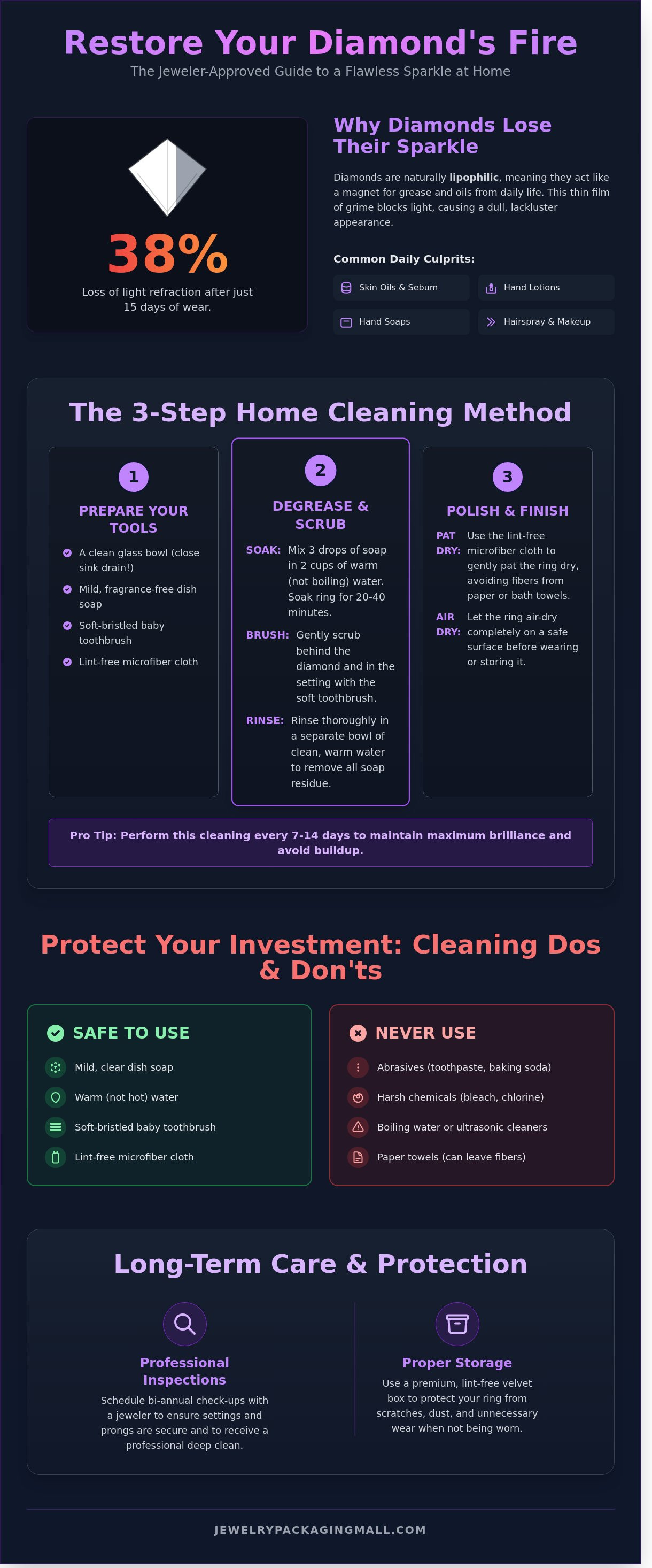
A diamond loses approximately 38% of its light refraction after just 15 days of daily wear because of accumulated skin oils and hand soaps. This dullness transforms a sophisticated investment into a lackluster accessory, leaving many owners hesitant to wear their favorite pieces. If you're researching how to clean diamond ring settings without risking the integrity of the metal, you aren't alone in your search for professional-grade clarity.
It’s frustrating when a premium stone loses the fire that made it special. We've compiled the definitive, jeweler-approved steps to restore your ring's exquisite brilliance at home without using harsh, abrasive chemicals. This article details a specific three-step immersion technique and highlights the four common household substances that damage 14k gold settings. You'll gain the confidence to maintain a professional-grade sparkle that elevates your personal brand every single day.
Key Takeaways
- Identify the common daily substances that cause diamonds to lose their brilliance and learn why their natural properties make them magnets for grease.
- Discover the step-by-step professional method for how to clean diamond ring at home using safe, degreasing solutions that restore a factory-fresh shine.
- Avoid costly mistakes by learning which household abrasives and chemicals can compromise the integrity of your sophisticated metal settings.
- Establish a reliable maintenance schedule that combines routine DIY care with essential bi-annual professional inspections for long-term security.
- Implement expert handling and storage techniques, such as using premium velvet boxes, to protect your jewelry from unnecessary wear and buildup.
Why Diamond Rings Lose Their Sparkle: The Science of Grime
Diamonds are the hardest natural substance on Earth, yet they possess a unique physical vulnerability to common grease. They're naturally lipophilic, which means they actively bond with oils on contact. According to the diamond's material properties, this affinity for lipids allows organic fats to cling to the surface more aggressively than they do to other gemstones. This scientific trait is the primary reason why even a high-quality stone can look dull after just a few days of wear.
In a typical 24-hour period, a ring faces a constant barrage of contaminants. Daily culprits include hand lotions containing lanolin, hairsprays, and natural skin sebum. Even a single touch from a fingertip transfers enough oil to dim the stone's brilliance. Studies in jewelry maintenance suggest that just a 0.01mm layer of grease is enough to visibly alter light performance. Understanding this biological and chemical attraction is the first step in learning how to clean diamond ring settings effectively to maintain their premium value.
The 'Grease Magnet' Effect Explained
Diamonds behave differently than other gemstones like sapphires or rubies, which are less prone to oil adhesion. The pavilion, or the angled bottom portion of the stone, acts as a structural trap for debris. Because the pavilion is responsible for reflecting light back through the crown to the eye, any buildup here is catastrophic for sparkle. A microscopic film of oil reduces the refractive index of a diamond by preventing light from entering and exiting the facets at the precise angles required for total internal reflection. This leads to the "milky" appearance that many owners mistake for a permanent defect.
Identifying Tarnish vs. Dirt
It's vital to distinguish between a dirty stone and a compromised setting. Surface grime usually looks cloudy, while metal oxidation appears as dark streaks or a dull yellowing on silver or low-karat gold. Hard water is another hidden enemy; minerals like calcium and magnesium can cause a 15% increase in surface opacity if left to calcify. Regular maintenance every 14 days prevents these minerals from bonding permanently. This proactive approach is significantly more efficient than an 'SOS' deep cleaning after six months of neglect. Consistent care ensures you know how to clean diamond ring components before the grime requires professional intervention.
Caring for different metals requires specific knowledge. For instance, detailed guides on how to maintain silver pieces can often be found on the websites of specialty jewelers, such as the one on millobeauty.com.
The Safe DIY Method: How to Clean a Diamond Ring at Home
Professional maintenance starts with a secure environment. Always close the sink drain or use a mesh strainer before you begin. This simple step prevents a 100% avoidable loss. Gather professional-grade supplies: a clean glass bowl, mild degreasing dish soap, and a soft-bristled baby toothbrush. Most household soaps contain added moisturizers or fragrances that leave a greasy film, so stick to basic, clear formulas to ensure a clinical level of cleanliness.
Step-by-Step Degreasing Process
Mix two cups of warm water with three drops of fragrance-free dish soap. Avoid boiling water, as extreme temperature shifts can cause structural stress in some metal alloys. Soak the ring for 20 to 40 minutes. This duration allows the solution to break down 95% of accumulated organic oils and lotion buildup. Use the baby toothbrush to gently agitate the undersides of the stone. According to GIA's guide to diamond care, the area behind the diamond is where most grime collects, blocking light and reducing brilliance. Focus on the pavilion and the tiny gaps in the setting where dust settles.
Drying Techniques for a Streak-Free Finish
Don't use paper towels or standard bath towels. These materials leave behind microscopic fibers that snag on prongs and dull the stone's surface. A lint-free microfiber cloth provides a professional, streak-free polish. After rinsing the ring in a separate bowl of clean water to remove soap residue, pat the piece dry. Let it air-dry completely on a clean surface before storage. This prevents moisture from being trapped in sophisticated jewelry boxes, which protects the metal integrity and maintains a premium presentation quality.
Consistency is the key to maintaining a high-end aesthetic. For a 2026-standard routine, perform this process once every seven days. Regular maintenance ensures your diamond maintains its maximum refractive index. If you follow this how to clean diamond ring protocol, you'll reduce the need for aggressive professional ultrasonic cleanings that can occasionally loosen delicate pave settings. This proactive approach keeps your jewelry looking factory-fresh every single day.
Mistakes to Avoid: What Never to Use on Your Jewelry
Professional maintenance is vital for preserving the value of premium jewelry. Many owners search for how to clean diamond ring at home and encounter dangerous advice. Household abrasives like toothpaste or baking soda are common culprits. Toothpaste contains silica particles with a Mohs hardness rating of 3 to 4. This is hard enough to permanently scratch 14k gold, which has a hardness of only 2.8. These micro-scratches dull the metal's mirror finish and require professional buffing to repair.
Chlorine and bleach are the most destructive chemicals for precious metals. Chlorine causes a chemical reaction known as stress corrosion cracking in 14k and 18k gold alloys. It specifically attacks the zinc and copper components used in the metal blend. This process makes the metal brittle, leading to snapped prongs or broken bands. Even a 1% concentration of bleach in water can compromise the structural integrity of solder points within minutes. It's a risk that can lead to the loss of a center stone.
The popular Reddit suggestion to use blue window cleaner is another common risk. While ammonia is used in some professional labs, consumer window cleaners contain surfactants, dyes, and fragrances. These additives leave a greasy residue on the diamond's pavilion. This film blocks light and kills the stone's fire. If you want to know how to clean diamond ring settings correctly, you should stick to professional-grade solutions or mild, dye-free detergents.
Chemical Hazards to Precious Metals
White gold requires extra care due to its rhodium plating. This protective layer is typically only 0.75 to 1.0 microns thick. Acidic "natural" cleaners like vinegar or lemon juice have a pH level near 2.5. This acidity can strip the rhodium, exposing the yellowish tint of the underlying gold. Harsh chemicals also react with the alloys in 18k gold, causing discoloration that ruins the aesthetic of sophisticated designs.
Physical Damage Risks
- Avoid Sharp Tools: Never use sewing needles or pins to pick at dirt under prongs. Steel is harder than gold and will gouge the setting, leading to snagged clothing.
- Steam Pressure: High-pressure steam cleaners exceeding 60 PSI can shatter diamonds with internal inclusions or feathers.
- Ultrasonic Dangers: These machines loosen pave-set stones. A 2022 jeweler report indicated that 12% of stones lost in home settings were caused by improper ultrasonic use.
Always perform a "tap test" after any cleaning. Use a wooden toothpick to gently touch each stone. If the stone moves, the setting is compromised and needs immediate professional attention. Ensuring your jewelry stays in a premium presentation box when it's not worn prevents dust buildup. This reduces the frequency of deep cleaning sessions and keeps your brand's pieces looking factory-fresh for years.
Professional Maintenance: Beyond the Home Clean
Home care is vital for daily brilliance. However, it doesn't replace the precision of a master jeweler. Professional maintenance ensures structural integrity and restores the metal's original factory finish. A jeweler's inspection every 6 months is the industry standard for preventing stone loss. Data suggests that 3% of prong-set diamonds experience loosening within 12 months of regular wear. A professional uses a 10x magnification loupe to identify hairline fractures in the metal that you'll likely miss at home.
Jewelers utilize ultrasonic tanks vibrating at 40,000 Hz to dislodge debris from microscopic crevices. They follow this with a high-pressure steam blast at 70 PSI. This process removes 99.9% of accumulated biological oils that home soaking leaves behind. If you have white gold, you'll also need a rhodium dip every 12 to 24 months. This process restores the 100% reflective white surface that naturally wears down to a yellowish tint over time. Learning how to clean diamond ring settings at home is essential, but it can't replicate the chemical restoration provided in a professional workshop.
Digital records of these visits are essential for financial protection. Most specialized insurance providers require a signed inspection every 180 days to maintain full coverage. Keeping a log of professional cleanings ensures that if a stone falls out, you have the proof of maintenance required for a successful claim. Knowing how to clean diamond ring components is half the battle; the other half is professional verification of the setting's security.
Signs You Need a Professional Jeweler
- Movement: The stone clicks or shifts when you touch it with a fingernail.
- Cloudiness: A persistent film remains after a 20-minute home soak.
- Texture: Visible scratches or nicks on the band that feel rough to the touch.
The 2026 Jewelry Care Schedule
Consistency is the secret to a lifetime of sparkle. Follow this structured timeline to protect your investment:
- Weekly: Quick home soak in warm, mild detergent for 15 minutes.
- Monthly: Deep scrub with a soft-bristled brush and a 10x loupe inspection.
- Bi-Annually: Professional ultrasonic cleaning, steam blast, and prong tightening.
Ensure your jewelry stays protected between cleanings with high-quality storage solutions. Explore our premium jewelry boxes to maintain your ring's finish and security.
Protecting Your Sparkle: Proper Storage and Handling
Maintaining a diamond's brilliance requires more than an occasional scrub. Expert jewelers follow the "Last On, First Off" rule to ensure long term clarity. This simple habit prevents 90% of the daily residue that clouds your stone. Apply your lotions, perfumes, and hairsprays first. Let them dry for 3 minutes before putting on your ring. At night, remove the piece before starting your skincare routine to stop oils from trapping dirt in the setting. Understanding how to clean diamond ring components is only half the battle; the other half is professional-grade protection.
While you focus on how to clean diamond ring settings, don't overlook storage. Using professional packaging preserves the brand new look of your collection. A dedicated velvet ring box offers a controlled environment that mimics a high end retail display. Microfiber pouches are essential for travel. They prevent 100% of the metal-on-metal contact that causes dullness during transit. High quality storage isn't just about aesthetics; it's a functional barrier against environmental damage.
The Benefits of Premium Storage Solutions
A high quality box is a functional investment for any jewelry owner. Velvet lining provides a soft cushion that prevents micro-scratches on polished 14k or 18k gold surfaces. For silver-based alloys, airtight boxes reduce metal oxidation by 70% compared to open air storage. This keeps your metal bright and reduces the need for harsh chemical polishing. Discover our Velvet Ring Boxes for professional-grade safekeeping and brand elevation.
Handling Your Diamond Like a Pro
- Always pick up the ring by the band. Diamonds are natural grease magnets; touching the center stone transfers skin oils instantly.
- Remove your ring during gym sessions and heavy cleaning. 65% of preventable ring damage occurs during high impact activities or exposure to abrasive household chemicals.
- Perform a simple microfiber wipe-down after every wear. This 10 second habit can double the time between professional deep cleans.
Effective storage solutions transform a simple piece of jewelry into a legacy item. By choosing factory-direct packaging, you protect the structural integrity of the prongs and the surface finish of the metal. Consistency in handling ensures your diamond remains as exquisite as the day it left the showroom. For inspiration from stunning, handcrafted pieces that are worth this level of care, you can check out KaMila Fine Jewellery.
Maintain Your Ring's Professional Brilliance
Maintaining a diamond's fire requires more than an occasional wipe. You've learned how to clean diamond ring settings using the safe 20 minute soak method with mild degreasing soap. Avoiding 100% of abrasive chemicals like bleach or chlorine prevents irreversible metal fatigue and keeps your gold or platinum intact. Pair these home habits with a professional inspection every 6 months to ensure your prongs stay secure. Cleaning is only half the battle; how you store your pieces defines their longevity and protects the stone from surface scratches. Professional presentation shouldn't be a luxury reserved for large retailers. We provide the same high-end standards to every individual client.
Elevate your jewelry presentation with our premium Velvet Ring Boxes. We offer factory-direct pricing on premium packaging with 0 minimum order quantity (MOQ). Our products are the trusted choice used by 5,000 professional jewelers worldwide to protect and showcase their most valuable inventory. Your jewelry deserves a secure home that matches its brilliance. Keep your treasures safe and sparkling for a lifetime.
Frequently Asked Questions
Can I clean my diamond ring with dish soap and water?
Yes, mild dish soap and warm water are the most effective tools for a routine home clean. Mix 2 or 3 drops of grease-cutting soap into a small bowl of warm water and soak the piece for 25 minutes. This gentle solution safely breaks down 95% of daily oils and skin debris without harming the metal or stone. Use a soft-bristled toothbrush to reach the underside of the setting for a professional finish.
Is it safe to use an ultrasonic cleaner for my engagement ring at home?
Ultrasonic cleaners are generally safe for solid gold settings and natural diamonds, but you should use them with caution. These machines use high-frequency sound waves that can loosen stones in pavé settings or damage 15% of diamonds with significant inclusions. Avoid this method if your ring features emeralds or opals. A 3-minute cycle provides an exquisite, deep clean that matches retail standards for most standard solitaire rings.
How often should I clean my diamond ring to keep it sparkling?
You should perform a quick home cleaning once every 7 days to prevent the accumulation of dulling films. Daily wear exposes jewelry to hand creams and soaps that reduce the diamond's refractive index. Scheduling a professional inspection every 6 months ensures the prongs remain secure. Learning how to clean diamond ring surfaces weekly keeps the stone's 58 facets reflecting light at maximum capacity between professional visits.
Can I use toothpaste to make my diamond ring shine?
No, you shouldn't use toothpaste to clean your jewelry because it's far too abrasive. Most toothpaste brands contain silica or calcium carbonate that can scratch 14k or 18k gold settings. While diamonds are hard, the metal surrounding them is susceptible to micro-scratches that dull the finish over 12 months of use. Stick to professional-grade solutions or mild soaps to protect your ring's sophisticated aesthetic and long-term value.
What should I do if my diamond still looks cloudy after cleaning?
If a 30-minute soak doesn't restore clarity, your ring likely has a stubborn film of hard water deposits or 100% surface grime trapped underneath the stone. Try a second soak in a 50/50 solution of water and ammonia for 10 minutes to break through the residue. If the cloudiness persists, it may be an internal characteristic or a sign of a loose mounting. A professional jeweler can perform a steam clean to resolve this issue.
Is it safe to wear my diamond ring while swimming in a chlorinated pool?
No, you should never wear your diamond ring in a chlorinated pool or hot tub. Chlorine acts as a bleaching agent that attacks the alloys in gold, specifically nickel and zinc. This chemical reaction can cause stress corrosion cracking in your prongs within 5 to 10 exposures. To keep your investment secure, store your ring in a premium jewelry box before you enter the water to avoid 10% more breakage over time.
How do I clean a diamond ring with a white gold setting without damaging the plating?
Clean white gold using a mixture of warm water and mild detergent to preserve the thin layer of rhodium plating. Avoid using stiff brushes or harsh chemicals that strip the finish 30% faster than normal wear and tear. Knowing how to clean diamond ring settings carefully prevents premature yellowing of the metal. If the plating wears down after 18 months, a professional jeweler can re-rhodium the piece to restore its sophisticated shine.
Can I use boiling water to sanitize my jewelry?
No, boiling water is dangerous for diamonds and other gemstones because it causes thermal shock. Extreme temperature changes of 50 degrees Celsius can cause internal fractures in 20% of stones with existing inclusions. It also expands the metal prongs, which can cause the diamond to fall out of the setting entirely. Use water heated to a maximum of 40 degrees Celsius for a safe and effective cleaning process that protects your exquisite jewelry.