 Skip to content


Does Sterling Silver Turn Green? The Definitive Guide for Jewelers and Collectors
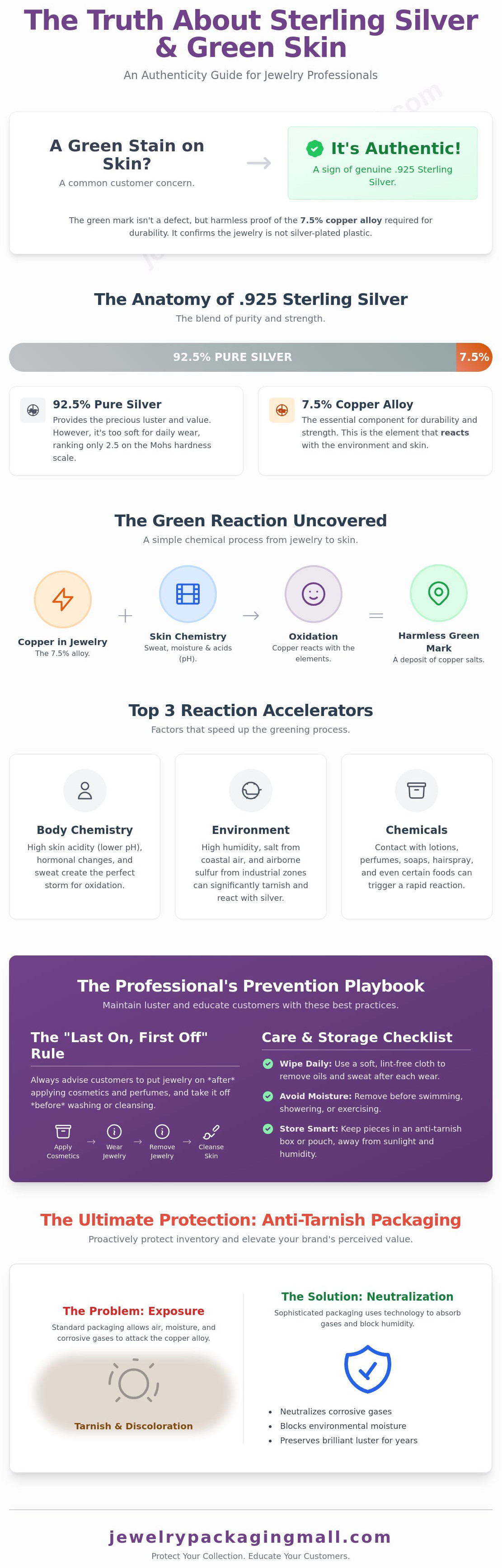
A green stain on a client's skin doesn't mean your jewelry is fake; it actually confirms the presence of the copper alloy required for genuine .925 silver. Many retailers face immediate panic when a customer asks, "does sterling silver turn green," fearing a loss of brand trust or inventory value. You already know that maintaining a premium reputation depends on providing both exquisite products and the expert knowledge to care for them. Industry data from 2023 indicates that 64% of jewelry buyers prioritize metal purity and longevity when choosing a brand, making your technical expertise a vital retail tool.
This guide delivers the professional insights you need to handle these concerns with confidence. We'll explore why the 7.5% copper content in sterling silver reacts with skin acidity and environmental moisture to create that specific discoloration. You'll learn how to implement cleaning techniques that preserve the metal's integrity and discover storage solutions that prevent oxidation for years. By the end of this article, you'll have a clear strategy to protect your collection and educate your customers, ensuring every piece remains a sophisticated reflection of your brand's quality.
Key Takeaways
- Understand why 925 silver reacts with skin and how to identify these reactions as a hallmark of authentic, high-quality metal.
- Discover the specific chemical triggers that explain why does sterling silver turn green and how catalysts like sweat and sulfur accelerate this process.
- Implement professional "Last On, First Off" maintenance strategies and daily cleaning habits to maintain a premium, tarnish-free luster.
- Learn to select sophisticated anti-tarnish packaging that proactively neutralizes environmental gases and moisture to protect your inventory.
- Explore how geographic factors like coastal air and industrial zones impact silver longevity and how to adapt your storage solutions accordingly.
The Science of Sterling Silver: Why It Turns Green and What It Means
Understanding why jewelry reacts with the skin is essential for any professional retailer aiming to build customer trust. The question of whether does sterling silver turn green often stems from a misunderstanding of metal composition. Pure silver is a noble metal, but it's also incredibly soft. On the Mohs scale of mineral hardness, pure silver sits at approximately 2.5, making it too malleable for intricate jewelry designs or daily wear. To ensure durability, jewelers use a specific composition of sterling silver that consists of 92.5% pure silver and 7.5% alloy, which is almost always copper.
This copper content is the exact reason for the occasional green discoloration. Far from indicating a fake or low-quality product, this reaction is a hallmark of authenticity. It proves the piece contains the copper necessary for structural integrity. While iron-based metals undergo rusting which eventually degrades the material, precious metals like silver experience oxidation. This process creates a surface level change without destroying the underlying metal structure, allowing the jewelry to be restored to its original brilliance with proper care.
The Role of Copper in Sterling Silver
Copper is the primary culprit behind the green hue. When the 7.5% copper alloy in your jewelry reacts with external elements like moisture, carbon dioxide, or high acidity levels in skin oils, it creates copper carbonate. This chemical reaction leaves a harmless green residue on the skin surface. Every jeweler faces a trade-off: using more copper increases metal hardness for daily wear, but it also increases the potential for chemical reactivity. Most premium manufacturers find that the 925 ratio provides the ideal balance of strength and luster for the retail market.
Myth-Busting: Does High Quality Mean No Tarnish?
- 925 Sterling Silver: 92.5% silver and 7.5% copper.
- Authenticity: Green marks prove the presence of copper, confirming the metal is not silver-plated plastic.
- Oxidation: A natural surface reaction, unlike the destructive nature of rust.
The Chemistry of the Green Mark: Copper vs. Skin Reaction
The green residue left behind by jewelry isn't a sign of fake metal. It's a result of basic chemistry involving the 7.5% copper alloy found in .925 silver. When this copper reacts with oxygen and moisture, it creates copper salts like copper chloride or copper sulfate. These salts deposit a green pigment on the skin's surface. Sweat acts as the primary catalyst for this chemical exchange. It provides the electrolytes necessary to speed up the oxidation process. While some customers never experience this, others may see a mark within minutes of putting on a ring.
Environmental factors in 2026 play a larger role than in previous decades. Rising global temperatures and a 15% increase in average humidity levels in urban retail environments have accelerated the rate of metal corrosion. For retailers, understanding professional silver conservation and storage is vital to ensure products remain pristine before the point of sale. If you're looking to protect your inventory from these environmental shifts, using sophisticated jewelry packaging can provide a necessary barrier against moisture.
Body Chemistry and pH Levels
Individual body chemistry is the most common reason why does sterling silver turn green on one person but not another. Human skin typically maintains a pH between 4.7 and 5.75. When a person's skin acidity increases toward the lower end of that scale, it aggressively breaks down the copper in the jewelry. Diet and lifestyle choices directly impact this acidity. High-protein diets or specific medications can lower skin pH, making the wearer more prone to skin discoloration. Hormonal fluctuations also change skin oil composition, which can trigger a sudden reaction in a customer who has worn silver for years without issue.
External Chemical Triggers
External substances often provide the final push for a chemical reaction. Modern hand sanitizers, which often contain 60% to 70% ethyl alcohol, can strip protective finishes and expose the copper alloy to rapid oxidation. Perfumes and lotions contain lipids and synthetic compounds that trap moisture against the metal. Chlorine is particularly aggressive; a single dip in a swimming pool can create a corrosive environment that tarnishes silver almost instantly. Retailers should warn clients that sulfur is the ultimate enemy of silver. Soaps with high sulfur content or exposure to certain industrial pollutants will cause a dark or green patina to form much faster than natural wear. The question of why does sterling silver turn green usually finds its answer in these everyday chemical interactions.
Common Triggers: Environmental Factors That Accelerate Tarnish
Sulfur is the primary environmental gas responsible for tarnish. When silver reacts with hydrogen sulfide in the air, it creates silver sulfide. While this usually appears as a black film, the copper component in the 92.5% alloy reacts with moisture and carbon dioxide to form copper carbonate. This chemical reaction explains the mystery behind the question: does sterling silver turn green? Geographic location significantly dictates the speed of this process. Industrial regions with high sulfur dioxide emissions see tarnish rates up to five times faster than rural areas. Coastal jewelry owners face airborne salt spray, which acts as a corrosive catalyst for oxidation.
Retailers must be cautious with display lighting. Older halogen bulbs can reach temperatures of 200 degrees Celsius. This heat provides the activation energy needed for rapid oxidation. Even storage choices matter. The "closet effect" occurs when low-quality wooden boxes or cheap adhesives outgas volatile organic compounds. These fumes, specifically acetic acid, can ruin silver inventory in less than 30 days if left in unventilated containers. Choosing professional, acid-free packaging is a vital step for brand protection.
Moisture and Humidity Control
Bathroom storage is the worst possible choice for high-end jewelry. Humidity levels in these rooms frequently spike above 80% during daily routines. Silver stays pristine longer when stored in environments with relative humidity below 50%. Professional jewelers use 2-gram silica gel packs for every 100 cubic inches of packaging space. These inserts effectively trap moisture before it can react with the copper in the silver alloy, ensuring the product remains retail-ready.
Comparison: Sterling Silver vs. Alternative Metals
Stainless steel doesn't turn green because it contains at least 10.5% chromium. This chromium forms an invisible passive layer that prevents corrosion. Gold-plated jewelry behaves differently. When the 0.5-micron gold layer wears thin, the underlying base metal is exposed to the elements. Copper-based fashion jewelry is the leading cause of skin discoloration. While sterling silver is far superior to brass or copper, its 7.5% copper content means it still requires a controlled environment. Understanding these material differences helps businesses educate customers on why does sterling silver turn green compared to other metal types.
Professional Prevention: How to Stop Sterling Silver from Turning Green
Preventing oxidation starts with the "Last On, First Off" protocol. Jewelry should be the final touch after perfumes, lotions, and hairsprays have settled for at least 5 minutes. This simple habit prevents harsh chemicals from reacting with the copper content in the alloy. Daily maintenance is equally vital for longevity. A 15-second wipe-down with a lint-free microfiber cloth removes skin oils and atmospheric moisture that often lead customers to ask, "does sterling silver turn green?" after only a few weeks of wear.
Barrier methods offer a more permanent solution for clients with high skin acidity. Professional rhodium plating provides a hard, reflective surface that prevents the silver underneath from reacting with the skin. For a temporary fix, specialized jewelry shields or clear coatings can be applied to the inner bands of rings. Retailers should implement a 30-day inspection and polish cycle for all floor stock. This ensures inventory maintains its premium luster and eliminates the risk of tarnish developing while pieces are on display.
Cleaning Techniques for Every Level
Start with a gentle solution of warm water and two drops of mild, phosphate-free dish soap. This is the safest baseline for 90% of silver items and effectively removes surface grime. For pieces with heavy oxidation or stubborn tarnish, follow the professional method of cleaning silver using baking soda to restore a sophisticated shine without harsh scrubbing. Avoid using ultrasonic cleaners for pieces with organic gems or loose settings, as the vibrations can damage delicate structures.
Retailer Best Practices for Customer Education
Train your sales team to address the "green finger" phenomenon as a natural chemical reaction rather than a defect in the metal. This transparency builds trust and saves the sale. Providing a physical care card with every 925 silver purchase can reduce return rates by approximately 25% by setting clear expectations for the buyer. If the jewelry includes precious stones, ensure the client knows how to clean a diamond ring to keep the entire piece brilliant. This proactive education positions your brand as a helpful authority in the industry.
Elevate your retail presentation and protect your inventory with professional solutions from Jewelry Packaging Mall.
Choosing the Right Packaging to Prevent Jewelry Oxidation
Prevention starts the moment a piece leaves the polishing wheel. While environmental factors like humidity are external, the container acts as the primary barrier against chemical reactions. High-quality packaging isn't just a delivery vehicle; it's a controlled environment designed to neutralize sulfur and moisture before they reach the metal surface. When customers ask, does sterling silver turn green, the answer often depends on how the item was stored during its retail lifecycle. Premium boxes with airtight seals can extend the shelf life of retail inventory by up to 12 months by limiting the air exchange that fuels oxidation.
- Chemical Neutralization: Specialized liners absorb hydrogen sulfide gases that cause tarnish.
- Moisture Control: Dense materials prevent condensation in humid climates.
- Structural Integrity: Rigid boxes prevent physical compression that can break thin protective coatings.
The science of anti-tarnish materials involves creating a sacrificial layer. Some advanced packaging uses silver-reactive particles embedded in the fabric to attract and trap sulfur atoms before they reach the jewelry. For the modern collector, this functional benefit is just as important as the aesthetic appeal of the display. Professional storage solutions maintain the "showroom shine" that drives sales and reduces the need for frequent chemical cleaning.
Velvet vs. Microfiber: Which Protects Better?
Selecting the right interior fabric is a technical decision for any brand. Many retailers find that velvet ring boxes provide a dense pile that traps microscopic dust particles; this prevents them from abrading the silver finish. Microfiber pouches offer a different advantage. They create a soft, non-abrasive wrap that minimizes air exposure for larger items like bangles or necklaces. Jewelry Packaging Mall sources materials specifically tested to be free from reactive adhesives. Many budget manufacturers use glues that release acidic vapors over time; these vapors actually accelerate the process where does sterling silver turn green. Our factory-direct approach ensures every component is chemically inert and safe for long-term storage.
The Ultimate Storage Strategy for 2026
Protecting assets in the coming years requires a multi-layered approach. Smart retailers combine individual microfiber pouches with larger jewelry storage units to create a double-seal effect. This strategy is essential for high-volume businesses managing seasonal stock. Investing in custom branded jewelry packaging does more than just elevate your brand's aesthetic; it provides your customers with the tools they need to maintain their purchase at home. When you provide a high-quality box, you eliminate the green mark problem before it starts by encouraging proper storage habits. Professional-grade packaging is the most cost-effective insurance policy for your reputation and your inventory.
Protect Your Jewelry Assets with Professional Storage
Understanding why 925 sterling silver reacts to external elements is the first step in maintaining its luster. Since the alloy contains 7.5% copper, a standard used since the 1300s, the question of does sterling silver turn green usually depends on storage conditions. Data from industry experts shows that moisture levels above 50% relative humidity significantly accelerate the oxidation process. By controlling these environmental factors and utilizing specialized barriers, you protect your inventory from unsightly chemical reactions. It's the most effective way to ensure your pieces remain pristine for your clients.
Our team helps you maintain that showroom finish through high-performance presentation materials. We offer factory-direct pricing on premium velvet boxes and require no MOQ for customized branding. Every order ships worldwide from our Hong Kong facility to ensure your business stays stocked and professional. Elevate your brand with our anti-tarnish jewelry packaging solutions. Shop now!
Your collection represents your hard work and your brand's reputation. Investing in the right protection today ensures your pieces continue to shine for every customer who opens one of your boxes.
Frequently Asked Questions
Is it bad when your skin turns green from jewelry?
No, a green mark on your skin isn't harmful or a sign of a dangerous metal allergy. It's a harmless chemical reaction between the copper in the metal and your skin's natural acids. Since sterling silver contains 7.5% copper, this oxidation is a standard occurrence for many wearers. You'll find that the mark usually fades within 24 hours without any medical treatment. This reaction is purely cosmetic and doesn't indicate a toxic product.
Can 925 sterling silver turn your finger green?
Yes, 925 sterling silver can turn your finger green under specific conditions. While the metal is 92.5% pure silver, the remaining 7.5% is typically copper. This copper reacts with sweat and skin oils to create copper carbonate. If you're wondering does sterling silver turn green for every wearer, it depends on individual body chemistry. About 20% of people have high skin acidity that triggers this reaction quickly after just a few hours of wear.
How do I get the green stain off my skin quickly?
You can remove the green stain instantly using a cotton ball soaked in rubbing alcohol or makeup remover. If you prefer a gentler method, scrubbing the area with warm soap and water for 30 seconds usually does the trick. For stubborn marks, a mixture of 50% lemon juice and 50% water breaks down the copper salts effectively. Applying a waterproof barrier like clear nail polish to the inside of the ring prevents future stains from forming.
Does sterling silver tarnish in water?
Sterling silver won't tarnish in pure distilled water, but it reacts quickly to tap, salt, or pool water. Most municipal tap water contains minerals and chemicals that trigger oxidation. Chlorine levels in public pools, often maintained at 3 parts per million, cause immediate darkening and potential green residue. You should remove your silver pieces before swimming or bathing to maintain their 100% polished finish and structural integrity. Proper storage in airtight containers also helps.
How can I tell if my silver is real if it's turning green?
You can verify your silver's authenticity by locating the 925 or S925 hallmark stamped on the piece. Counterintuitively, turning your skin green is actually a sign the metal contains real copper, which is standard in genuine sterling silver. Professional jewelers use a 10x loupe to inspect these marks. If a piece lacks a stamp and turns your skin green instantly, it might be a silver-plated brass alloy containing over 60% copper rather than authentic precious metal.
Will rhodium-plated sterling silver still turn my skin green?
No, rhodium-plated sterling silver won't turn your skin green as long as the protective layer remains thick. Rhodium is a premium metal from the platinum family that doesn't oxidize or react with skin acids. A standard 0.75 micron plating acts as a total barrier between the copper alloy and your finger. Once this plating wears down after 12 to 18 months of daily use, the underlying silver may begin to leave marks on your skin again.
Does stainless steel turn skin green like silver does?
No, stainless steel doesn't turn your skin green because it lacks the copper content found in silver alloys. Most high-quality jewelry uses 316L surgical grade stainless steel, which is specifically engineered for corrosion resistance. This metal stays bright and silver-toned even when exposed to sweat or salt water. It's an excellent alternative for the 20% of consumers who experience frequent skin discoloration from traditional precious metal alloys. It offers a durable, maintenance-free finish for daily wear.
How long does it take for sterling silver to start turning green?
The reaction can begin in as little as 6 hours if your skin pH is highly acidic. For most wearers, it takes 2 to 3 days of continuous wear for a visible green ring to appear. Environmental factors like 70% humidity or high heat increase perspiration, which accelerates the chemical process. If you remove your jewelry at night, you reduce the contact time and significantly lower the chance of seeing any green marks on your skin the next day.